

2025 Showcase
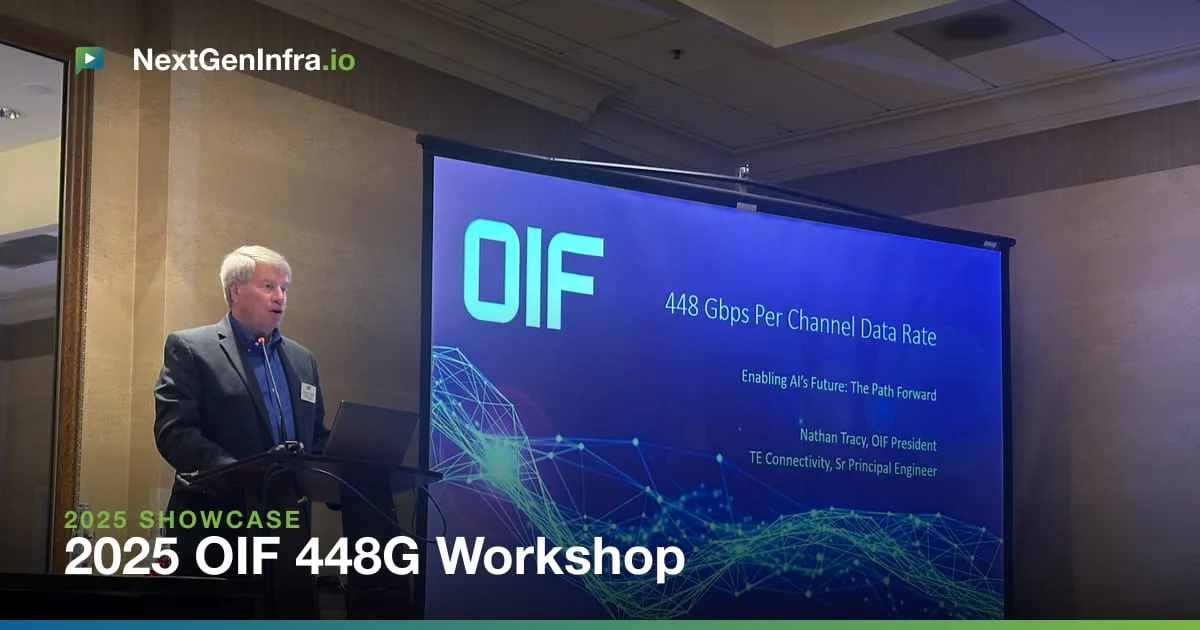
The OIF’s 448Gbps Signaling for AI Workshop, held on April 15–16, 2025, in Santa Clara, California, convened industry leaders to address the challenges of scaling interconnect speeds beyond 224Gbps to meet the demands of next-generation AI and machine learning applications. Keynote speakers from companies like Google, Microsoft, Meta, and OpenAI emphasized the urgency of adopting 448G SerDes technologies to support the growing bandwidth and performance requirements of AI infrastructures. The workshop featured discussions on modulation schemes, system architectures, and the need for industry-wide collaboration to develop interoperable solutions for future high-speed networks.
Watch the videos below captured at the workshop below. Also, grab our latest research brief right from this page.
2025 OIF 448G Workshop
The OIF’s 448Gbps Signaling for AI Workshop, held on April 15–16, 2025, in Santa Clara, California, convened industry leaders to address the challenges of scaling interconnect speeds beyond 224Gbps to meet the demands of next-generation AI and machine learning applications. Keynote speakers from companies like Google, Microsoft, Meta, and OpenAI emphasized the urgency of adopting 448G SerDes technologies to support the growing bandwidth and performance requirements of AI infrastructures. The workshop featured discussions on modulation schemes, system architectures, and the need for industry-wide collaboration to develop interoperable solutions for future high-speed networks.
Watch the videos below captured at the workshop below. Also, grab our latest research brief right from this page.
Sponsor Spotlight 650 Group
448G Will Be The First AI-Native Network Standard
Alan Weckel, Founder and Technology Analyst at 650 Group, explains how the new 448 speed standard at OAF marks the first speed designed specifically for the AI era, addressing hyperscalers' next-generation chip requirements. His analysis shows how this advancement has expanded networking from a $10-15 billion market to a $50-100 billion opportunity in data centers, with server markets potentially reaching $300-500 billion.
Sponsor Spotlight Cignal AI
448G Is Inevitable—But Far from Easy
Scott Wilkinson, Lead Analyst, Networking Components at Cignal AI, examines the development of 448G PAM4 technology and its implications for networking speed transitions from 50G to 400G and beyond. His analysis combines technical expertise with market insights to evaluate how AI applications are accelerating the need for advanced data center technologies, including coherent light and PAM4 solutions.
Sponsor Spotlight Google
Google's AI Challenge: Scaling Networks for 100K+ TPU Clusters
Tad Hofmeister, Optical Hardware Engineer for Machine Learning Systems at Google, outlines the bandwidth requirements and technical hurdles for the seventh-generation TPU Ironwood and future TPU generations, highlighting the need for 448G signaling by 2028. He examines the challenges of achieving higher data rates through PAM4, PAM6 and PAM8 modulations to support large language model training that requires over 100,000 TPUs in a single cluster.
Sponsor Spotlight IEEE
448 Signaling Sets New Path for Ethernet's Future
John D'Ambrosia, Chair of the IEEE P802.3dj Task Force at IEEE, leads industry collaboration on 448 signaling development at the OAF workshop, representing early planning efforts for future Ethernet standards. His experience guiding three previous Ethernet speed transitions positions him to address the technical challenges of advancing from 200 to 400 gigabit implementations while the current standard is still being finalized.
Sponsor Spotlight Marvell
Rethinking Connectors with 2D Interfaces for the 448G Era
Matt Traverso, Distinguished Engineer at Marvell, leads research on high-density 2D connector designs to enhance 448G signaling capabilities for AI and large-scale computing. His work prioritizes signal integrity optimization and thermal efficiency to create lossless electrical channels for next-generation data centers.
Sponsor Spotlight Meta
ling Bandwidth from 228 to 448G
Xu Wang, Hardware Engineer at Meta, examines the growing network bandwidth demands for AI systems, focusing on scaling from 228 to 448 Gbits per second while managing power and space constraints. He outlines technical hurdles in modulation formats and interconnect components, emphasizing the need for industry alignment to support next-generation AI infrastructure development.
Sponsor Spotlight Microsoft
448G Connectivity: Key Requirements & Solutions
Ashwin Gumaste, Principal AI Systems Architect at Microsoft, examines the industry's shift from 224G to 448G connectivity, focusing on power budget constraints and retimer solution challenges. He explores technical requirements including 40 dB reach specifications, power optimization targets, and cost considerations while discussing both copper and optical implementation approaches.
Sponsor Spotlight Nubis Communications
Gearbox-Free Electrical-Optical Co-Design for 448G Era
Peter Winzer, Founder & CTO of Nubis Communications, emphasizes the importance of electrical-to-optical integration at the OIF 448G workshop, focusing on solutions that operate without power-consuming gearboxes and can be directly driven from SerDes.
Sponsor Spotlight OIF
Breaking 100GHz Barriers for Higher Bandwidth
Sam Kocsis, Director of Standards and Technology at OIF, leads discussions at the organization's 448G AI workshop to address next-generation deployment challenges through industry collaboration. The workshop examines connector interfaces and system architectures, focusing on increasing data rates through module density and signal speed improvements, while developing new standards for enhanced bandwidth capabilities.
Sponsor Spotlight OIF
448G Building the Future of High-Speed Connectivity Standards
Michael Klempa, Interoperability Working Group Chair at OIF, leads discussions at the 448G AI workshop to establish industry standards for high-speed connectivity. The initiative brings together multiple standards organizations and industry partners to develop a comprehensive framework document covering various 448G applications, from long-reach to chip-to-chip connections, while incorporating feedback from SerDes vendors, connector manufacturers, and end users.
Sponsor Spotlight OIF
Coherent Optics: From 400G to 1.6T
Tom Issenhuth, Co-Chair of the MA&E Committee at OIF, outlines the progression of coherent optics standards from 400G ZR to 800G ZR and upcoming 1.6T interfaces. The increasing demands of AI/ML workloads and higher data rates are making coherent optics essential for both inter- and intra-data center connectivity, especially when accounting for optical switching requirements.
Sponsor Spotlight OIF
Why 400G Systems Demand a New Era of Industry-Wide Collaboration
Cathy Liu, SerDes Architect at OIF, explains how the shift to 400G systems demands unprecedented collaboration between equipment vendors, component makers, and chip designers to overcome bandwidth constraints. She describes how OIF is coordinating industry-wide efforts to evaluate circuit designs and modulation approaches that will enable successful 400G deployment despite power and reliability hurdles.
Sponsor Spotlight OIF
Energy-Efficient Solutions for AI Infrastructure
Jeff Hutchins, Director of the CTO Office at OIF, leads the organization's Energy Efficient Interfaces group, which builds upon their 2020 co-packaging work with hyperscalers. The group advances multiple energy-saving technologies, including transmit linear receiver solutions and high-density connectors, while addressing critical power consumption and reliability challenges in AI training environments.
Sponsor Spotlight OIF
Shaping Next-Gen AI Infrastructure & Network Solutions
Nathan Tracy, President of OIF, leads a comprehensive 400 gigabit workshop focused on AI compute infrastructure requirements, bringing together industry experts, hyperscalers, and analysts. The workshop addresses six key areas including electrical data rates, coherent technology, and network capacity management, with Tracy emphasizing recent progress in 448 gigabit solutions while tackling technical hurdles in achieving higher data rates.
Sponsor Spotlight TE Connectivity
TE Connectivity Advances Channel Modeling for 448G
Nathan Tracy, System Architect at TE Connectivity, led discussions at OIF's 448G networking workshop for AI applications, focusing on channel models and analysis for next-generation interconnects. TE Connectivity is working with ecosystem partners to evaluate channel performance within equipment size limitations while meeting increasing data transmission requirements.
Sponsor Spotlight UALink Consortium
GPU Networking Evolution: From 200G to 400G
Kurtis Bowman, Chairman of UALink Consortium, outlines the industry's quick advancement from 200G to 400G networking while highlighting the organization's new specification release. The standardization enables multi-vendor GPU and switch compatibility through high-bandwidth, low-latency connections that allow multiple GPUs to operate as a unified system.
Latest Research Brief
Download Our Latest Report
Data Center Networking in 2026 — Scaling to New Heights
More about this report →
No personal info needed to download
Download the Latest Report
By downloading this report, you agree to our Terms of Use and Privacy Policy.
Highlights from industry thought leaders










Video interviews
448G Will Be The First AI-Native Network Standard
- 448G is the first speed standard designed specifically for the AI era and hyperscaler next-gen chips.
- AI has expanded the data center networking market from $10-15B to a $50-100B opportunity.
- Associated server markets could reach $300-500 billion.
Abstract
Alan Weckel, Founder and Technology Analyst at 650 Group, explains how the new 448 speed standard at OAF marks the first speed designed specifically for the AI era, addressing hyperscalers' next-generation chip requirements. His analysis shows how this advancement has expanded networking from a $10-15 billion market to a $50-100 billion opportunity in data centers, with server markets potentially reaching $300-500 billion.
448G Is Inevitable—But Far from Easy
- 448G PAM4 continues the networking speed progression from 50G to 400G and beyond.
- AI applications are accelerating demand for advanced data center technologies.
- Both coherent optics and PAM4 solutions are in play for next-gen interconnects.
Abstract
Scott Wilkinson, Lead Analyst, Networking Components at Cignal AI, examines the development of 448G PAM4 technology and its implications for networking speed transitions from 50G to 400G and beyond. His analysis combines technical expertise with market insights to evaluate how AI applications are accelerating the need for advanced data center technologies, including coherent light and PAM4 solutions.
Google's AI Challenge: Scaling Networks for 100K+ TPU Clusters
- Google projects it will need 448G signaling by 2028 for future TPU generations.
- The 7th-gen TPU Ironwood and successors drive the bandwidth roadmap.
- LLM training clusters exceeding 100,000 TPUs are pushing toward PAM4, PAM6 and PAM8 modulation.
Abstract
Tad Hofmeister, Optical Hardware Engineer for Machine Learning Systems at Google, outlines the bandwidth requirements and technical hurdles for the seventh-generation TPU Ironwood and future TPU generations, highlighting the need for 448G signaling by 2028. He examines the challenges of achieving higher data rates through PAM4, PAM6 and PAM8 modulations to support large language model training that requires over 100,000 TPUs in a single cluster.
448 Signaling Sets New Path for Ethernet's Future
- The IEEE P802.3dj Task Force is doing early planning on 448 signaling for future Ethernet standards.
- D'Ambrosia has chaired three previous Ethernet speed transitions.
- 448 work is starting while the current 200-to-400 gigabit standard is still being finalized.
Abstract
John D'Ambrosia, Chair of the IEEE P802.3dj Task Force at IEEE, leads industry collaboration on 448 signaling development at the OAF workshop, representing early planning efforts for future Ethernet standards. His experience guiding three previous Ethernet speed transitions positions him to address the technical challenges of advancing from 200 to 400 gigabit implementations while the current standard is still being finalized.
Rethinking Connectors with 2D Interfaces for the 448G Era
- Marvell is researching high-density 2D connector designs to support 448G signaling.
- The goal is lossless electrical channels for next-generation AI data centers.
- Design priorities center on signal integrity optimization and thermal efficiency.
Abstract
Matt Traverso, Distinguished Engineer at Marvell, leads research on high-density 2D connector designs to enhance 448G signaling capabilities for AI and large-scale computing. His work prioritizes signal integrity optimization and thermal efficiency to create lossless electrical channels for next-generation data centers.
ling Bandwidth from 228 to 448G
- Meta is targeting a scale from 228 to 448 Gbits per second for AI networks.
- Power and space constraints are key limits on next-gen bandwidth.
- Modulation formats and interconnect components need industry alignment to advance.
Abstract
Xu Wang, Hardware Engineer at Meta, examines the growing network bandwidth demands for AI systems, focusing on scaling from 228 to 448 Gbits per second while managing power and space constraints. He outlines technical hurdles in modulation formats and interconnect components, emphasizing the need for industry alignment to support next-generation AI infrastructure development.
448G Connectivity: Key Requirements & Solutions
- Microsoft frames the shift from 224G to 448G around power budget and retimer challenges.
- Requirements include roughly 40 dB reach specifications alongside power and cost targets.
- Both copper and optical implementation approaches are on the table.
Abstract
Ashwin Gumaste, Principal AI Systems Architect at Microsoft, examines the industry's shift from 224G to 448G connectivity, focusing on power budget constraints and retimer solution challenges. He explores technical requirements including 40 dB reach specifications, power optimization targets, and cost considerations while discussing both copper and optical implementation approaches.
Gearbox-Free Electrical-Optical Co-Design for 448G Era
- Nubis argues for tight electrical-to-optical integration in the 448G era.
- Its approach eliminates power-consuming gearboxes.
- Optics can be driven directly from SerDes.
Abstract
Peter Winzer, Founder & CTO of Nubis Communications, emphasizes the importance of electrical-to-optical integration at the OIF 448G workshop, focusing on solutions that operate without power-consuming gearboxes and can be directly driven from SerDes.
Breaking 100GHz Barriers for Higher Bandwidth
- OIF's 448G workshop targets next-gen deployment challenges through industry collaboration.
- Higher data rates are pursued via both module density and signal speed improvements.
- Work spans connector interfaces, system architectures, and new bandwidth standards.
Abstract
Sam Kocsis, Director of Standards and Technology at OIF, leads discussions at the organization's 448G AI workshop to address next-generation deployment challenges through industry collaboration. The workshop examines connector interfaces and system architectures, focusing on increasing data rates through module density and signal speed improvements, while developing new standards for enhanced bandwidth capabilities.
448G Building the Future of High-Speed Connectivity Standards
- OIF's Interoperability Working Group is building a framework document for 448G standards.
- It covers 448G applications from long-reach down to chip-to-chip connections.
- Input is drawn from SerDes vendors, connector manufacturers, and end users across multiple standards bodies.
Abstract
Michael Klempa, Interoperability Working Group Chair at OIF, leads discussions at the 448G AI workshop to establish industry standards for high-speed connectivity. The initiative brings together multiple standards organizations and industry partners to develop a comprehensive framework document covering various 448G applications, from long-reach to chip-to-chip connections, while incorporating feedback from SerDes vendors, connector manufacturers, and end users.
Coherent Optics: From 400G to 1.6T
- Coherent optics standards are progressing from 400G ZR to 800G ZR and upcoming 1.6T interfaces.
- AI/ML workloads are making coherent optics essential for both inter- and intra-data center links.
- Optical switching requirements further strengthen the case for coherent.
Abstract
Tom Issenhuth, Co-Chair of the MA&E Committee at OIF, outlines the progression of coherent optics standards from 400G ZR to 800G ZR and upcoming 1.6T interfaces. The increasing demands of AI/ML workloads and higher data rates are making coherent optics essential for both inter- and intra-data center connectivity, especially when accounting for optical switching requirements.
Why 400G Systems Demand a New Era of Industry-Wide Collaboration
- The shift to 400G systems demands unprecedented collaboration across equipment vendors, component makers, and chip designers.
- OIF is coordinating industry-wide evaluation of circuit designs and modulation approaches.
- Power and reliability hurdles remain the main obstacles to 400G deployment.
Abstract
Cathy Liu, SerDes Architect at OIF, explains how the shift to 400G systems demands unprecedented collaboration between equipment vendors, component makers, and chip designers to overcome bandwidth constraints. She describes how OIF is coordinating industry-wide efforts to evaluate circuit designs and modulation approaches that will enable successful 400G deployment despite power and reliability hurdles.
Energy-Efficient Solutions for AI Infrastructure
- OIF's Energy Efficient Interfaces group builds on its 2020 co-packaging work with hyperscalers.
- It advances transmit linear receiver solutions and high-density connectors.
- Power consumption and reliability are the critical challenges in AI training environments.
Abstract
Jeff Hutchins, Director of the CTO Office at OIF, leads the organization's Energy Efficient Interfaces group, which builds upon their 2020 co-packaging work with hyperscalers. The group advances multiple energy-saving technologies, including transmit linear receiver solutions and high-density connectors, while addressing critical power consumption and reliability challenges in AI training environments.
Shaping Next-Gen AI Infrastructure & Network Solutions
- OIF's workshop convenes industry experts, hyperscalers, and analysts around AI compute infrastructure.
- It addresses six key areas including electrical data rates, coherent technology, and network capacity management.
- Tracy highlights recent progress in 448 gigabit solutions.
Abstract
Nathan Tracy, President of OIF, leads a comprehensive 400 gigabit workshop focused on AI compute infrastructure requirements, bringing together industry experts, hyperscalers, and analysts. The workshop addresses six key areas including electrical data rates, coherent technology, and network capacity management, with Tracy emphasizing recent progress in 448 gigabit solutions while tackling technical hurdles in achieving higher data rates.
TE Connectivity Advances Channel Modeling for 448G
- TE Connectivity is advancing channel models and analysis for 448G next-gen interconnects.
- It is working with ecosystem partners to evaluate channel performance.
- The challenge is meeting rising data rates within existing equipment size limitations.
Abstract
Nathan Tracy, System Architect at TE Connectivity, led discussions at OIF's 448G networking workshop for AI applications, focusing on channel models and analysis for next-generation interconnects. TE Connectivity is working with ecosystem partners to evaluate channel performance within equipment size limitations while meeting increasing data transmission requirements.
GPU Networking Evolution: From 200G to 400G
- UALink Consortium has released a new specification amid the fast move from 200G to 400G.
- The standard enables multi-vendor GPU and switch compatibility.
- High-bandwidth, low-latency links let multiple GPUs operate as a unified system.
Abstract
Kurtis Bowman, Chairman of UALink Consortium, outlines the industry's quick advancement from 200G to 400G networking while highlighting the organization's new specification release. The standardization enables multi-vendor GPU and switch compatibility through high-bandwidth, low-latency connections that allow multiple GPUs to operate as a unified system.
Reader feedback on Data Center Networking in 2026 — Scaling to New Heights: "Appreciate the broad coverage and unique insights." "Up, Out, Across, and Away we go." Download our latest report and send us your feedback!
Download the Latest Report
By downloading this report, you agree to our Terms of Use and Privacy Policy.
Continue exploring
More executive showcases across next-gen infrastructure.
2025
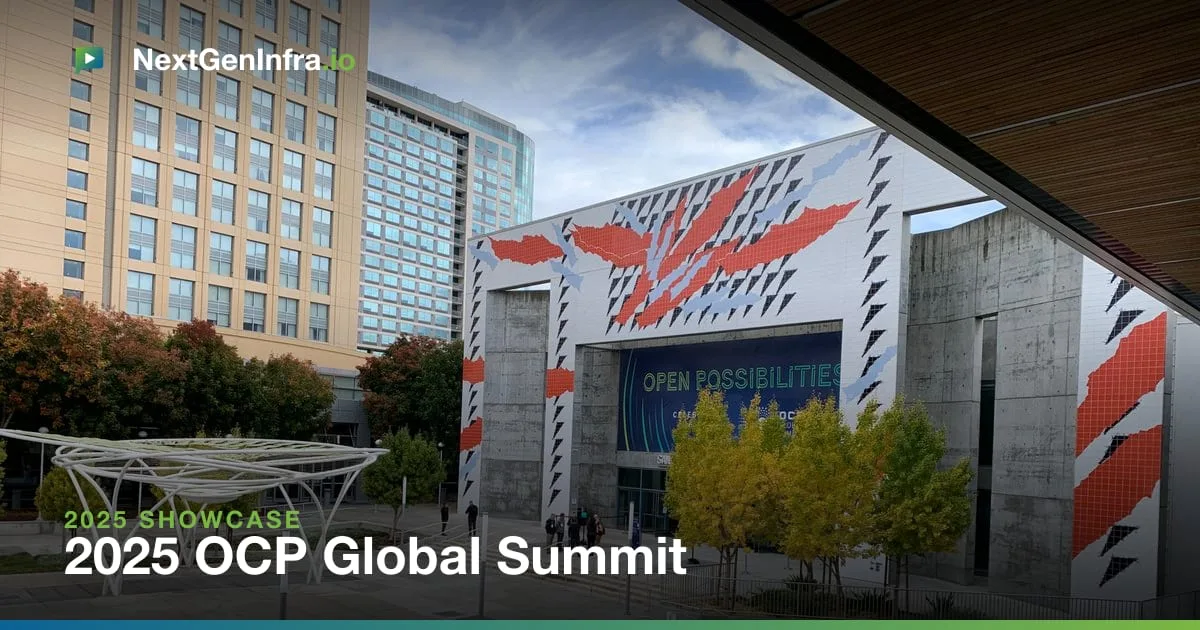
2025 OCP Global Summit
Exclusive videos from thought leaders covering data center networking (scale-up, scale-out, scale-across), photonics, liquid cooling, SONiC
2026
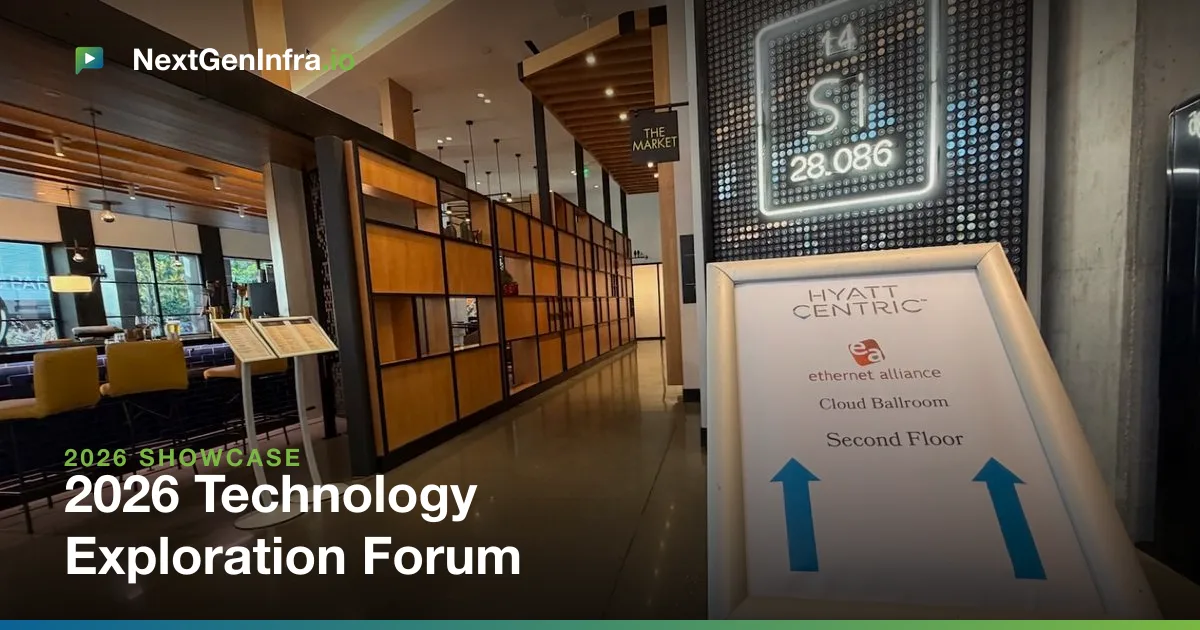
2026 Technology Exploration Forum
Highlights from Ethernet Alliance's 2026 TEF. Topics: 224/448 Gbps/lane, 1.6/3.2 Tbps, AI fabric, InfiniBand, UCIe, CXL, PCIe Gen 6/7
2026
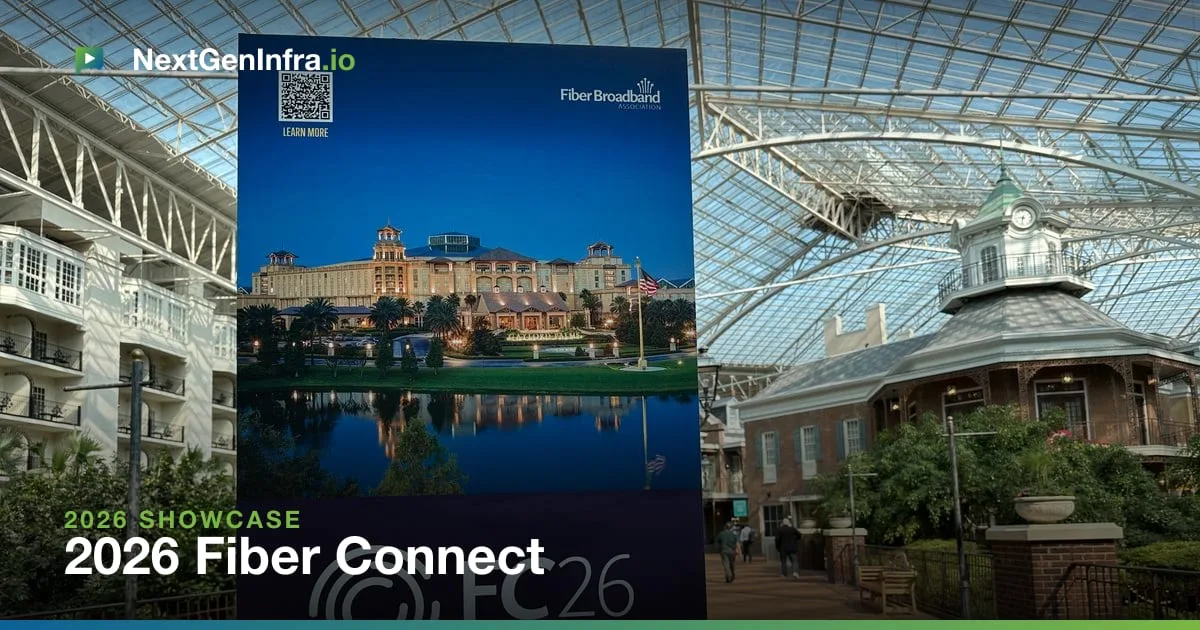
2026 Fiber Connect
Leading executives at Fiber Connect 2026 (Orlando, Florida) organized by Fiber Broadband Association discuss the latest in fiber broadband.