

2026 AI for Networking
Welcome to the NextGenInfra AI for Networking Showcase, our research guide for enterprise and carrier network executives navigating the shift from AIOps to agentic network operations.
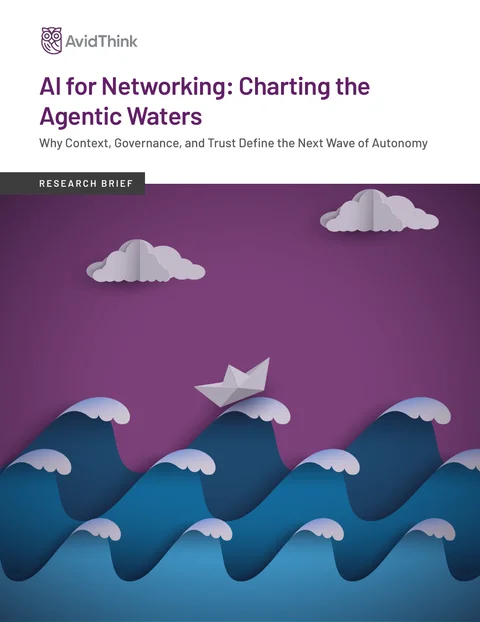
This year's report, AI for Networking: Charting the Agentic Waters, looks at why context, governance, and trust define the next wave of autonomy — how reasoning agents move operations from detecting problems to explaining and resolving them, and what it takes to let them act safely in production networks. Download the report by clicking the button on the right (ungated - no personal information required). New to the series? Our 2025 edition covers the first wave of agentic frameworks, and this year's report grades how its predictions held up.
Thanks to our sponsors for making this resource possible!
Governing Autonomous Networks
Agentic AI Ends Firefighting With Trusted Autonomy
AI Threats Make Network Automation a Top Priority
Self-Driving Networks Promise 10x Faster Deployments
Agentic AI for Network Operations
Agentic AI for Telecom Ops
AI Networks at 150,000-GPU Scale
When AI Runs the Network, Who Governs?
AI Traffic Doubles Every 6 Months: Why Networks Need Agentic Operations
Agentic AI for Networking: Highlights
AI Threats Make Network Automation Urgent
Self-Driving Networks Cut Complaints 90%
How AI Agents Drive Autonomous Networks
How Reasoning AI Is Reshaping Telecom Operations
AI's Perfect Storm: Why Agentic Networking Is Now a Board-Level Priority
Courtesy of our sponsors!
Complimentary Report Download
AI for Networking: Charting the Agentic Waters
No personal info needed to download
By downloading this report, you agree to our Terms of Use and Privacy Policy.
What the 2026 report finds
Two years into a five-to-seven-year journey to full autonomy, agentic AI is doing real work in network operations — but in a far more constrained way than 2025's announcements implied. Across the report and our sponsor interviews, five themes define where agentic networking stands in 2026.
The harness, not just the model, made agents useful
Agents now investigate, correlate, and recommend across enterprise, carrier, and data center networks. The leap came from control patterns borrowed from coding agents — curated context, action governance, a deterministic execution layer, and token budgets — more so than innovations in foundation models. Per-token prices fell but bills rose, so tokens are now budgeted like headcount.
Context is the new competitive moat
An agent is only as accurate as the source of truth, ontology, and digital twin beneath it. Who owns that context layer is 2026's buy-versus-build fault line: tier-1 telcos treat their ontologies as intellectual property, while vendors pitch theirs as product differentiators.
Autonomy is granted one action class at a time
Generally available vendor products stop at pre-authorized action classes — HPE's trusted actions, Extreme's Coworker mode. Only a handful of operator-built carrier loops run unattended, each for one scenario in one domain.
Governance shifts from approvals to evidence
Agent sprawl forced a governance plane: agent identity, registries and gateways, policy-as-code, autonomy settings, and an immutable audit trail. Vendors argue approval-based governance cannot keep pace with AI-driven change, and agentic platforms move operators from human in the loop to human on the loop by providing reasoning logs and auditable runbooks.
Agents reason; deterministic automation acts
Changes reach the network only through proven workflows, controllers, and GitOps pipelines — elements of pre-agentic network automation. This year's best published automation outcomes came from deterministic automation and a clean source of truth, not from agents alone.
Highlights from industry thought leaders








Director’s Cut
Extended, in-depth versions of select interviews.
Governing Autonomous Networks
- Human-centric, approval-based governance cannot keep pace with the scale and impact of AI-driven decisions, so CSPs need an evidence-based approach.
- Operators must understand the consequences of overlapping AI actions — blast radius, how far to roll back, and whether to correct course going forward.
- Blue Planet config change management immutably records who initiated an event, why, the context used, the AI's decisions, and the devices affected.
Abstract
Agentic AI Ends Firefighting With Trusted Autonomy
- Extreme Agent ONE, embedded in Extreme Platform ONE, runs in Coworker mode to reason and recommend and in Operator mode to execute changes autonomously.
- Extreme favors "trusted autonomy" over unrestricted AI access, with governance, context, and safety controls growing in importance as autonomy rises.
- New Perspective Senior Living uses AI-based templates with its own guardrails to launch nine new communities in a week instead of months.
Abstract
AI Threats Make Network Automation a Top Priority
- AI-driven threats, accelerated by frontier models such as Mythos, are making network automation a top priority for CTOs and infrastructure leaders.
- With up to 30% of configurations bespoke and depreciation stretching to seven or eight years, ripping and replacing equipment is impractical.
- Gluware's proof-of-trust architecture grounds AI in the customer's own configurations, and Titan Exposure Management pinpoints only the devices that are actually vulnerable.
Abstract
Self-Driving Networks Promise 10x Faster Deployments
- HPE's AI-native, self-driving network is in production today, delivering deployments up to 10x faster through zero-ticket cutovers.
- A large healthcare institution reports 90% fewer user complaints, and HPE challenges enterprises to test it on their worst site.
- Costly cloud tokens are pushing inference to the edge, which HPE covers with one AI visibility layer across Wi-Fi, switching, SD-WAN, NAC, and the data center.
Abstract
Agentic AI for Network Operations
- Nokia's NSP unifies network data through ETL, curation, and ontologies, then layers on an agent and context framework with memory, RBAC, and validation.
- NSP supports large language models from Google, Anthropic, and OpenAI so customers can balance performance against token costs.
- Purpose-built troubleshooting, assurance, and insight agents aim to move customers from TM Forum Level 2 to Levels 3 and 4 with lower risk.
Abstract
Agentic AI for Telecom Ops
- Rising 5G and AI complexity, compressed margins, and retiring experts form a perfect storm for service provider operations.
- Ribbon's Acumen agentic AIOps platform pairs domain intelligence with Amazon Neptune, Bedrock, and AgentCore to cut root-cause analysis from hours or days to minutes.
- A crawl-walk-run approach keeps humans in control, starting with NOC assistance and change management, with closed-loop remediation expected within two to three years.
Abstract
Video interviews
AI Networks at 150,000-GPU Scale
- BE Networks builds networks for AI — including a 150,000+ GPU deployment with IREN — and uses AI to run them better.
- Avoiding congestion can require action within nanoseconds, far faster than human operators can respond.
- Time series and graph databases work with AI agents to diagnose, predict, and prevent failures, which is essential for neoclouds at scale.
Abstract
When AI Runs the Network, Who Governs?
- Governance of autonomous networks has become a recurring boardroom topic for communications service providers worldwide.
- Approval-based governance gives way to an evidence-based approach that reconstructs and explains AI actions after they are taken.
- When no human is available to approve actions, governance must be embedded in the network itself — in how it decides, reacts, and presents evidence.
Abstract
AI Traffic Doubles Every 6 Months: Why Networks Need Agentic Operations
- AI-driven traffic is doubling every six months across Cisco customer networks, and agent tasks generate up to 450% more traffic per task.
- Agents shift operations from human in the loop to human on the loop, showing their work through reasoning logs and pre-approved, auditable runbooks.
- Cisco Cloud Control, now generally available in the US, unifies networking, security, and observability data from ThousandEyes and Splunk as context for agentic ops.
Abstract
Agentic AI for Networking: Highlights
- Agentic networking changes how network teams spend their time rather than cutting headcount, as complexity grows while budgets and staffing stay flat.
- AI for networking has moved from AIOps anomaly detection to plain-English generative AI queries to agents that explain, recommend, and act within guardrails.
- The differentiator is what an agent connects to, the context it uses, and the governance around it — a platform question, not a chatbot feature.
Abstract
AI Threats Make Network Automation Urgent
- AI-driven threats make network automation and agentic operations an urgent necessity rather than a nice-to-have.
- Up to 30% of configurations are bespoke snowflakes, and even greenfield networks quickly drift and turn brown without automation.
- Gluware's DIAL layer replaces sprawling Ansible and Python scripts with one validated, consistent automation mechanism.
Abstract
Self-Driving Networks Cut Complaints 90%
- HPE frames its self-driving network around zero-ticket outcomes, citing deployments 10x faster than previous vendors.
- The world's largest healthcare institution reports 90% fewer complaints from doctors and staff after deployment.
- The University of Texas at Dallas now runs its network with one engineer instead of four, freeing staff from firefighting.
Abstract
How AI Agents Drive Autonomous Networks
- Nokia defines an AI agent as an autonomous element that takes a goal, perceives its environment, and continuously plans, decides, acts, and evaluates.
- A March 2026 Appledore study finds operators expect AI to cut mean time to repair, optimize capacity, speed service activation, and reduce truck rolls.
- With the industry centered on TM Forum autonomy Level 2, Nokia's agentic framework, including MCP and A2A, helps operators progress with less risk.
Abstract
How Reasoning AI Is Reshaping Telecom Operations
- Reasoning AI correlates thousands of alarms from 15 to 20 systems, turning hours or days of root-cause analysis into minutes.
- Humans stay in control for the next couple of years through AI co-pilots for the NOC and network changes.
- The milestone to watch is the first operator trusting closed-loop remediation to run unattended in production.
Abstract
By downloading this report, you agree to our Terms of Use and Privacy Policy.
Continue exploring
More executive showcases across next-gen infrastructure.

2026 MWC Barcelona
Leading executives at MWC 2026 in Barcelona discussing AI, ML, GenAI, agentic AI, AI-RAN, O-RAN, 5G-Advanced, 6G, and plenty more AI.
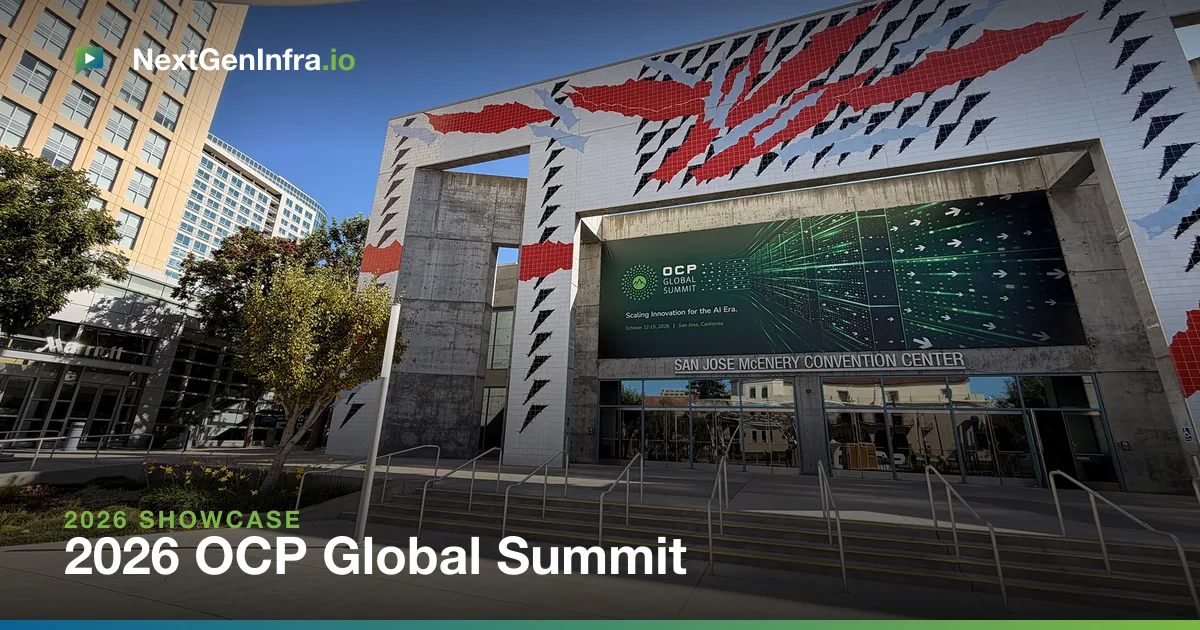
2026 OCP Global Summit
Exclusive videos from OCP Global Summit 2026 (Oct 12-15, San Jose). Topics: co-packaged optics, 800V racks, AI inference disaggregation, edge DPUs, AI computing continuum
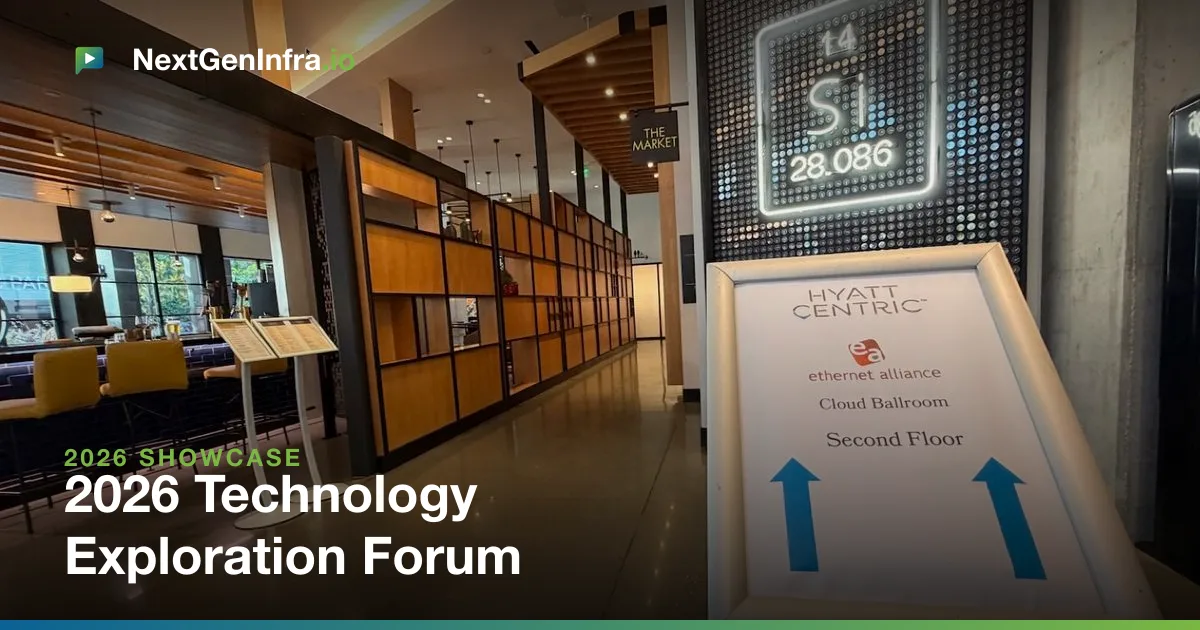
2026 Technology Exploration Forum
Highlights from Ethernet Alliance's 2026 TEF. Topics: 224/448 Gbps/lane, 1.6/3.2 Tbps, AI fabric, InfiniBand, UCIe, CXL, PCIe Gen 6/7