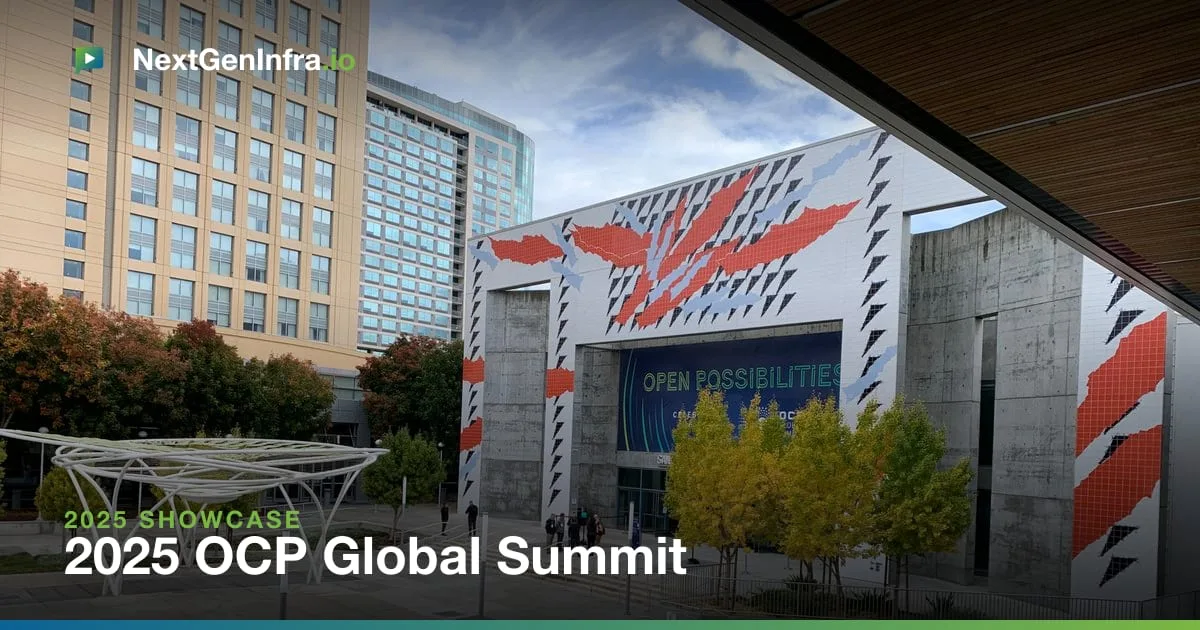
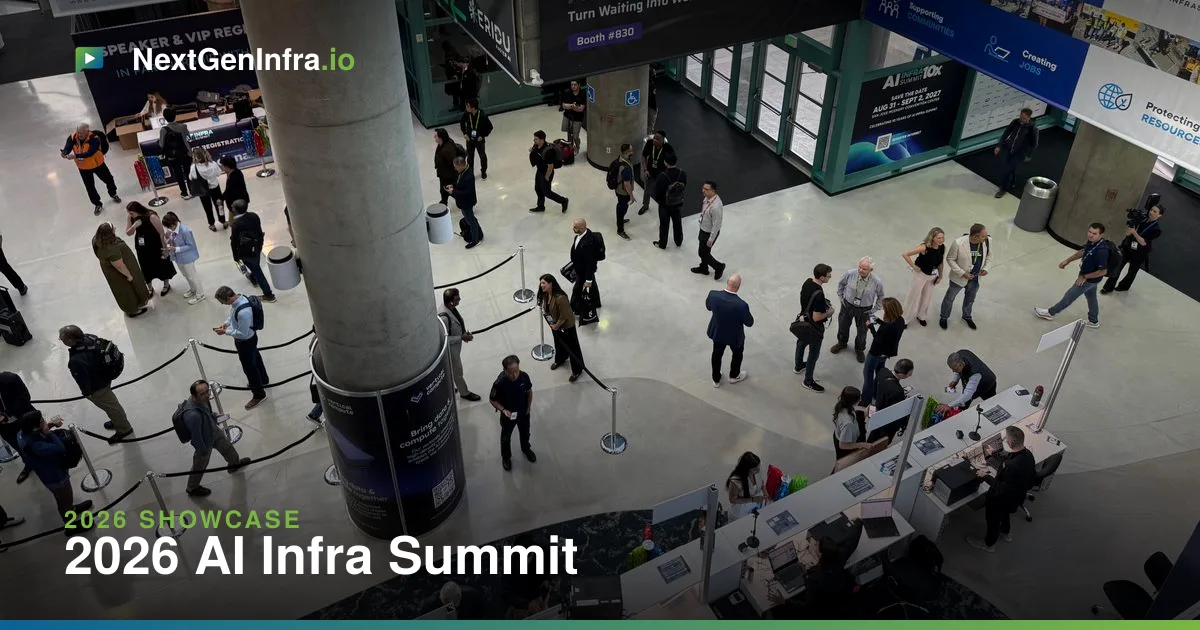
2026 Showcase
Technology Exploration Forum Showcase
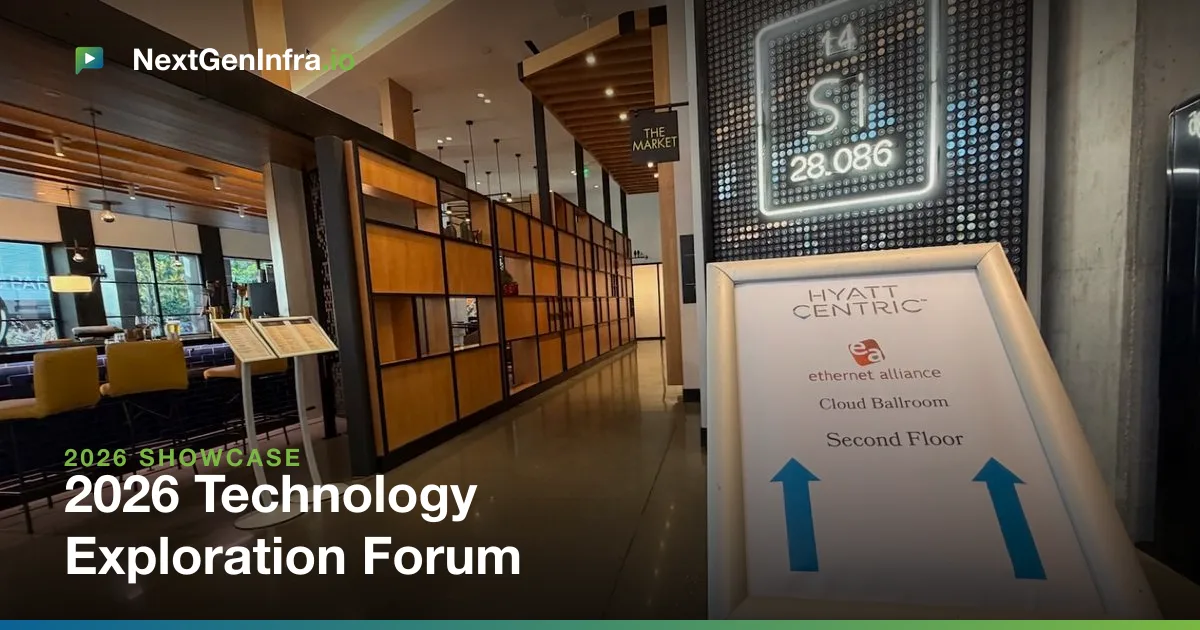
The Ethernet Alliance held its Technology Exploration Forum (TEF), “The AI Future: Ethernet,” at the Hyatt Centric in Mountain View, CA on October 7–8, 2026. With AI networking converging on Ethernet, the focus has moved from adoption to evolution — 400 Gb/s per lane signaling, the path from 1.6T to 3.2T Ethernet, IM-DD and coherent optics, and next-generation optical packaging. The NextGenInfra.io team was on the ground to capture thought leader perspectives on what Ethernet needs to scale AI across front-end, scale-out, and scale-up networks.
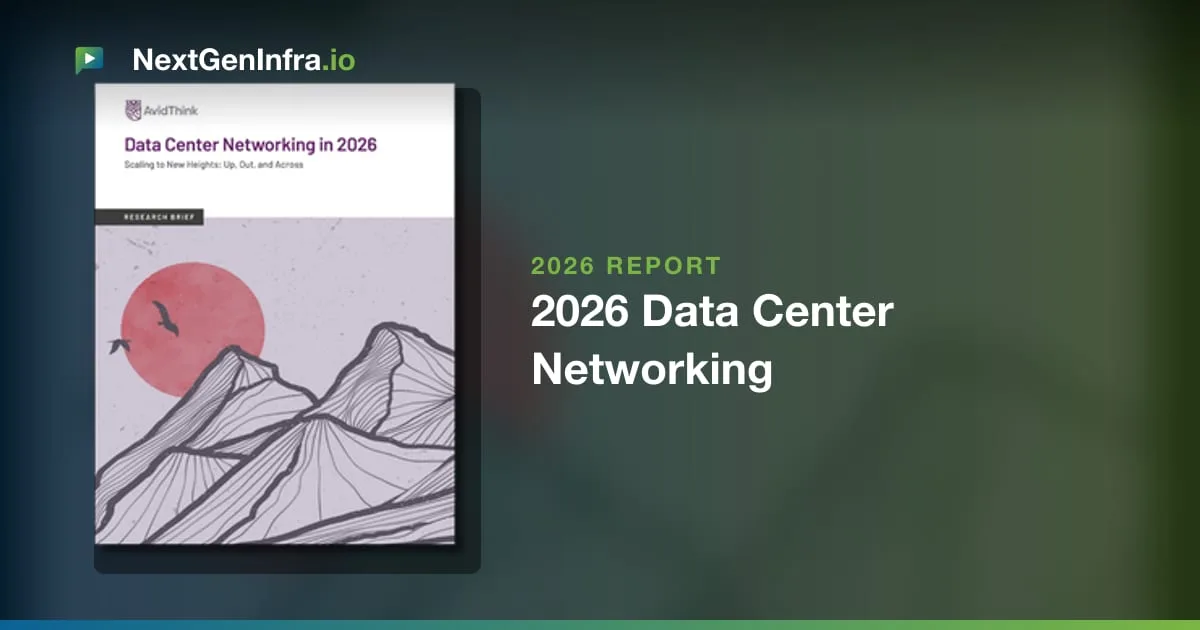
While you're here, feel free to grab our latest research brief right from this page.
Sponsor Spotlight 650 Group
How 400G Electrical Unlocks $1 Trillion AI Network Market This Decade
Alan Weckel, Founder and Technology Analyst at 650 Group, presents at TEF 2026 on how 400 gig electrical technology enables AI-driven network deployments by unlocking 3.2 terabit speeds through 400 by 8 configurations as Ethernet enters the scale-up space alongside scale-out and scale-across domains. He explains that this evolution will drive the Ethernet switching market beyond $300 billion this decade and exceed one trillion dollars early next decade, requiring an order of magnitude expansion in manufacturing capacity as deployments shift from individual switches to switch racks and from tens of millions to hundreds of millions of ports.
Sponsor Spotlight Broadcom
Solving 100G Signaling: Modulation, Power & Channel Reach Trade-offs
Cathy Liu, SerDes Architect at Broadcom and OIF board member, addresses the challenges of 100-gig signaling, explaining that the combination of modulation, channel reach, and power presents the most significant obstacle, with no single modulation perfectly serving all topologies based on current infrastructure. Liu emphasizes that solving the 400-gig challenge requires a holistic systems approach combining modulation decisions with power and latency considerations, noting that PAM6 works best for passive copper cable backplanes, PAM4 for active cables, and long-reach channels need AEC, ACC, or linear optics, while chip-to-module applications can support both standards depending on vendor resources.
Sponsor Spotlight Ciena
Coherent Optics Inside Data Centers
Eric Maniloff, Senior Systems Engineer at Ciena, discusses how coherent optics is finally entering data centers with 1.6 terabit Ethernet, driven by AI workloads that prioritize power, latency, and loss budgets over cost-per-bit. He explains that the industry debate has shifted from whether to adopt coherent optics to which type — high-performance 1600 ZR class DSPs versus custom Ethernet-optimized DSPs designed specifically for data center AI applications.
Sponsor Spotlight CommScope
448G per Lane: Power, Loss, and Co-Design
Earl Parsons, Director of Data Center Architecture Evolution at CommScope, examines the critical challenges of 400G networks in AI deployments, focusing on power consumption, optical loss budgets, and the necessity of low-loss, high-density fiber connectivity with excellent reliability. He emphasizes that co-design across racks, networking, power, and fiber is essential for AI infrastructure, highlighting CommScope's new V-groove connectors and self-cleaning technology as solutions, while expressing confidence that Ethernet will continue as an innovation platform for future AI networks.
Sponsor Spotlight Ethernet Alliance
Key Take Aways from Ethernet Alliance's Technology Exploration Forum 2026
David Rodgers, Chair and President of the Ethernet Alliance, reports from the Technology Exploration Forum in Mountain View on the near-complete 1.6 terabit Ethernet specification (802.3dj) expected to be ratified by OFC, the rapidly evolving ecosystem supporting it, and the forum's focus on pathways to 3.2 terabit Ethernet. He highlights the strong participation from hyperscalers, manufacturers, test and measurement companies, and interconnect vendors, noting that the combination of formal presentations and informal discussions creates a highly productive environment for developing new solutions.
Sponsor Spotlight Ethernet Alliance
AI Ethernet Infrastructure: Scaling to 400G and Beyond for Hyperscalers
John D'Ambrosia, Chair Emeritus of the Ethernet Alliance, discusses critical developments in Ethernet infrastructure for AI applications, covering challenges from 400 Gbit copper implementations to hyperscale data center connectivity, optical solutions including coherent and IM-DD optics, and various packaging approaches like NPO, CPO, and XPO. The Ethernet Alliance is developing a 2027 roadmap focused on Ethernet for AI that will examine emerging technologies including new fibers, connectors, and signaling innovations to advance the platform's evolution.
Sponsor Spotlight Keysight Technologies
AI Ethernet at 448G per Lane: Measurement Science Advances
John Calvin, Senior Strategic Planner at Keysight Technologies, discusses the company's role in developing validation and interoperability testing tools for AI industry Ethernet interconnects, particularly addressing challenges in the transition to 400 Gbps driven by channel and connector limitations. He highlights Keysight's development of vector network analyzers, oscilloscopes, and test tools for the 100-250 gigahertz space, emphasizing that measurement science will be critical over the next ten months for optimizing modulation format decisions as the industry advances toward 400 Gbps and 800 Gbps signaling.
Sponsor Spotlight Microsoft
Making 400G Optical Networks AI-Ready: Challenges and Solutions
Adrian Motamedi, Sr. Principal Azure Cloud & AI Architect at Microsoft, examines the requirements for making 400G optical networking AI-ready, highlighting challenges such as link flaps, modulation issues, and the need for better form factors with improved serviceability and fiber management. He advocates for vendors to implement stronger screening and quality control processes, expresses preference for NRZ or PAM4 modulation to avoid gearboxing complications, and emphasizes the importance of streamlined modulation schemes across infrastructure to prevent interoperability issues, latency increases, and power impacts.
Sponsor Spotlight Panduit
Power, Cooling & Fiber Optic Challenges
Bob Wagner, Senior Business Development Manager at Panduit, discusses how AI systems are driving major changes in data center infrastructure, including the shift from air to liquid cooling due to power constraints and the need for significantly more fiber optic infrastructure to support higher data rates and increasingly complex multi-plane architectures. He explains Panduit's three-pronged strategy of delivering foolproof solutions with protective features, future-proof installations that avoid premature replacement, and faster deployment times to help cloud vendors accelerate their time to revenue.
Sponsor Spotlight Panduit
Optics Will Enable Massive GPU Interconnection
Jose M Castro, Fiber Optical Communication Research Manager at Panduit, discusses how the proliferation of optics in scale-up architectures will enable connectivity for hundreds of thousands of GPUs over the next five years. He explains that as AI models grow requiring low latency and high bandwidth, Ethernet-based optical solutions will be the key enabling technology to expand GPU interconnection from 72 to 144, then to 500, and ultimately to thousands or tens of thousands of GPUs functioning as a single unit.
Sponsor Spotlight Synopsys
IEEE 802.3dv: 400G Ethernet Standards for AI & Front-End Networks
Kent Lusted, Distinguished Architect at Synopsys and chair of the IEEE 802.3dv 400 Gig per lane signaling task force, updates progress on Ethernet standards development addressing AI network demands for scale-up, scale-out, and front-end connectivity through copper interconnects, electrical backplanes, copper cables, and 500-meter optical reaches. The working group has achieved industry consensus on reusing existing logic architecture, converging toward PAM4 modulation for optical interconnects, and defining specifications for both PAM4 and PAM6 electrical standards to provide flexibility across various media types and interconnect architectures.
Sponsor Spotlight TE Connectivity
Solving 448 Gbps per Lane Challenges
Ashika Pandankeril Shaji, Manager System Architect at TE Connectivity, discusses how AI is driving Ethernet evolution in data centers, where increasing demand requires simultaneous solutions for bandwidth, density, modulation, and power, with 448 Gbps now achievable through PAM 4 and PAM 6 modulation depending on reach requirements. She predicts data centers will look dramatically different in five years with new architectures and cooling solutions, emphasizing the critical role of industry collaboration through organizations like the Ethernet Alliance in addressing these complex challenges.
Sponsor Spotlight Terahop
AI's 4 Major Challenges to Ethernet Standards in Data Centers
Rangchen Yu, Vice President of Marketing at Terahop, examines four major challenges AI presents to the Ethernet community: accelerated generational changes (now 1-2 years versus traditional 4-5 year cycles), immediate demand for deployment-ready products, massive volume increases requiring hundreds of millions of optical units across multiple generations, and diverse AI infrastructure requirements spanning scale-up, scale-out, scale-across, and scale-in networking. Yu expresses confidence that the Ethernet community will leverage its decades of experience with open standards in optical networking to successfully address these challenges.
Sponsor Spotlight VIAVI
Faster Speeds, Shorter Cycles, Massive Scale
Paul Brooks, Product Line Manager at VIAVI, discusses how AI is accelerating networking infrastructure demands at the Ethernet Alliance TEF 2026 event, with development cycles compressed from seven years to just two years and scale expanding from thousands to millions of connections requiring massive manufacturing capacity. Brooks expresses confidence that the industry ecosystem is well-positioned to meet these challenges and successfully transition to the gigascale data center era despite the compressed timelines and technical hurdles of advancing to 400 gigabit per lane technology.

Latest Research Brief
Download Our Latest Report
Data Center Networking in 2026 — Scaling to New Heights
More about this report →
No personal info needed to download
Download the Latest Report
By downloading this report, you agree to our Terms of Use and Privacy Policy.
Highlights from industry thought leaders












Video interviews
How 400G Electrical Unlocks $1 Trillion AI Network Market This Decade
- 400G electrical signaling is the key enabler for 3.2 terabit Ethernet in 400×8 configurations.
- Ethernet entering scale-up, alongside scale-out and scale-across, pushes switching past $300 billion this decade and toward $1 trillion early next decade.
- Ports grow from tens of millions to hundreds of millions, demanding an order-of-magnitude jump in manufacturing capacity.
Abstract
Alan Weckel, Founder and Technology Analyst at 650 Group, presents at TEF 2026 on how 400 gig electrical technology enables AI-driven network deployments by unlocking 3.2 terabit speeds through 400 by 8 configurations as Ethernet enters the scale-up space alongside scale-out and scale-across domains. He explains that this evolution will drive the Ethernet switching market beyond $300 billion this decade and exceed one trillion dollars early next decade, requiring an order of magnitude expansion in manufacturing capacity as deployments shift from individual switches to switch racks and from tens of millions to hundreds of millions of ports.
Solving 100G Signaling: Modulation, Power & Channel Reach Trade-offs
- Modulation, channel reach, and power together form the hardest problem as lane rates double from 200G to 400G.
- No single modulation fits every topology — PAM6 suits passive copper and backplanes, PAM4 suits active cables.
- Long reaches need AEC, ACC, or linear optics, and solving 400G calls for a holistic, industry-wide systems approach.
Abstract
Cathy Liu, SerDes Architect at Broadcom and OIF board member, addresses the challenges of 100-gig signaling, explaining that the combination of modulation, channel reach, and power presents the most significant obstacle, with no single modulation perfectly serving all topologies based on current infrastructure. Liu emphasizes that solving the 400-gig challenge requires a holistic systems approach combining modulation decisions with power and latency considerations, noting that PAM6 works best for passive copper cable backplanes, PAM4 for active cables, and long-reach channels need AEC, ACC, or linear optics, while chip-to-module applications can support both standards depending on vendor resources.
Coherent Optics Inside Data Centers
- Coherent optics is finally moving inside the data center with 1.6 terabit Ethernet.
- AI shifts priorities from cost-per-bit to power, latency, and loss budgets, with optical circuit switches driving higher loss.
- The debate is now which coherent — 1600ZR-class DSPs or lower-power, Ethernet-optimized designs — with IEEE decisions starting in 2027.
Abstract
Eric Maniloff, Senior Systems Engineer at Ciena, discusses how coherent optics is finally entering data centers with 1.6 terabit Ethernet, driven by AI workloads that prioritize power, latency, and loss budgets over cost-per-bit. He explains that the industry debate has shifted from whether to adopt coherent optics to which type — high-performance 1600 ZR class DSPs versus custom Ethernet-optimized DSPs designed specifically for data center AI applications.
448G per Lane: Power, Loss, and Co-Design
- Power is the top concern at 400G, and it is unclear whether DSP-less linear optics will still work at that rate.
- Tight optical loss budgets make low-loss, high-density, reliable fiber connectivity essential, co-designed with racks, power, and networking.
- CommScope is developing V-groove connectors and fast self-cleaning connector technology for AI networks.
Abstract
Earl Parsons, Director of Data Center Architecture Evolution at CommScope, examines the critical challenges of 400G networks in AI deployments, focusing on power consumption, optical loss budgets, and the necessity of low-loss, high-density fiber connectivity with excellent reliability. He emphasizes that co-design across racks, networking, power, and fiber is essential for AI infrastructure, highlighting CommScope's new V-groove connectors and self-cleaning technology as solutions, while expressing confidence that Ethernet will continue as an innovation platform for future AI networks.
Key Take Aways from Ethernet Alliance's Technology Exploration Forum 2026
- The 1.6 terabit Ethernet specification (802.3dj) is nearly complete and expected to be ratified by OFC.
- The 1.6T ecosystem is maturing fast with strong test, measurement, and interconnect participation, though cost per gigabit remains high.
- TEF focused on the path to 3.2 terabit Ethernet, building on 1.6T work with input from hyperscalers and manufacturers.
Abstract
David Rodgers, Chair and President of the Ethernet Alliance, reports from the Technology Exploration Forum in Mountain View on the near-complete 1.6 terabit Ethernet specification (802.3dj) expected to be ratified by OFC, the rapidly evolving ecosystem supporting it, and the forum's focus on pathways to 3.2 terabit Ethernet. He highlights the strong participation from hyperscalers, manufacturers, test and measurement companies, and interconnect vendors, noting that the combination of formal presentations and informal discussions creates a highly productive environment for developing new solutions.
AI Ethernet Infrastructure: Scaling to 400G and Beyond for Hyperscalers
- TEF 2026 tackled 400 Gb/s copper and the cabling burden of AI campuses with millions of cables between buildings.
- Optics options span IM-DD and coherent, packaged as NPO, CPO, or the emerging XPO form factor — with testability a challenge that needs early attention.
- The Ethernet Alliance is preparing a special 2027 roadmap edition focused on Ethernet for AI.
Abstract
John D'Ambrosia, Chair Emeritus of the Ethernet Alliance, discusses critical developments in Ethernet infrastructure for AI applications, covering challenges from 400 Gbit copper implementations to hyperscale data center connectivity, optical solutions including coherent and IM-DD optics, and various packaging approaches like NPO, CPO, and XPO. The Ethernet Alliance is developing a 2027 roadmap focused on Ethernet for AI that will examine emerging technologies including new fibers, connectors, and signaling innovations to advance the platform's evolution.
AI Ethernet at 448G per Lane: Measurement Science Advances
- Channel and connector limits make the modulation choice for 400 Gbps the central open question.
- Keysight is building VNAs, oscilloscopes, and test tools for the 100–250 GHz range, along with tools to characterize dielectric materials.
- Measurement science will shape modulation decisions over the next ten months, with 800 Gbps signaling already in view.
Abstract
John Calvin, Senior Strategic Planner at Keysight Technologies, discusses the company's role in developing validation and interoperability testing tools for AI industry Ethernet interconnects, particularly addressing challenges in the transition to 400 Gbps driven by channel and connector limitations. He highlights Keysight's development of vector network analyzers, oscilloscopes, and test tools for the 100-250 gigahertz space, emphasizing that measurement science will be critical over the next ten months for optimizing modulation format decisions as the industry advances toward 400 Gbps and 800 Gbps signaling.
Making 400G Optical Networks AI-Ready: Challenges and Solutions
- Link flaps, modulation issues, and form factors with poor serviceability hold back AI-ready 400G optics.
- Vendors need stronger screening and quality control so the burden doesn't fall on hyperscalers and customers.
- Microsoft prefers NRZ or PAM4 for optics, since gearboxing from PAM6 to PAM4 adds interoperability, latency, and power penalties.
Abstract
Adrian Motamedi, Sr. Principal Azure Cloud & AI Architect at Microsoft, examines the requirements for making 400G optical networking AI-ready, highlighting challenges such as link flaps, modulation issues, and the need for better form factors with improved serviceability and fiber management. He advocates for vendors to implement stronger screening and quality control processes, expresses preference for NRZ or PAM4 modulation to avoid gearboxing complications, and emphasizes the importance of streamlined modulation schemes across infrastructure to prevent interoperability issues, latency increases, and power impacts.
Power, Cooling & Fiber Optic Challenges
- Power constraints are pushing AI systems from air to liquid cooling.
- Higher data rates and multi-plane architectures of eight planes or more demand far more fiber infrastructure.
- Panduit focuses on foolproof, future-proof, and faster-to-deploy solutions to speed cloud providers' time to revenue.
Abstract
Bob Wagner, Senior Business Development Manager at Panduit, discusses how AI systems are driving major changes in data center infrastructure, including the shift from air to liquid cooling due to power constraints and the need for significantly more fiber optic infrastructure to support higher data rates and increasingly complex multi-plane architectures. He explains Panduit's three-pronged strategy of delivering foolproof solutions with protective features, future-proof installations that avoid premature replacement, and faster deployment times to help cloud vendors accelerate their time to revenue.
Optics Will Enable Massive GPU Interconnection
- Optics in scale-up architectures will be the biggest surprise of the next five years.
- Growing AI models need low latency and high bandwidth across ever-larger scale-up domains.
- Ethernet-based optics will take scale-up from 72 to 144, then 500, and eventually tens of thousands of GPUs acting as one.
Abstract
Jose M Castro, Fiber Optical Communication Research Manager at Panduit, discusses how the proliferation of optics in scale-up architectures will enable connectivity for hundreds of thousands of GPUs over the next five years. He explains that as AI models grow requiring low latency and high bandwidth, Ethernet-based optical solutions will be the key enabling technology to expand GPU interconnection from 72 to 144, then to 500, and ultimately to thousands or tens of thousands of GPUs functioning as a single unit.
IEEE 802.3dv: 400G Ethernet Standards for AI & Front-End Networks
- IEEE 802.3dv is defining 400G-per-lane signaling for backplanes, copper cables, and 500-meter optical reaches.
- The task force has strong consensus on reusing the existing logic architecture and converging on PAM4 for optics.
- Defining both PAM4 and PAM6 electrical specs leaves room for linear, half-retimed, co-packaged, and near-packaged designs.
Abstract
Kent Lusted, Distinguished Architect at Synopsys and chair of the IEEE 802.3dv 400 Gig per lane signaling task force, updates progress on Ethernet standards development addressing AI network demands for scale-up, scale-out, and front-end connectivity through copper interconnects, electrical backplanes, copper cables, and 500-meter optical reaches. The working group has achieved industry consensus on reusing existing logic architecture, converging toward PAM4 modulation for optical interconnects, and defining specifications for both PAM4 and PAM6 electrical standards to provide flexibility across various media types and interconnect architectures.
Solving 448 Gbps per Lane Challenges
- AI demand forces bandwidth, density, modulation, and power to be solved at the same time.
- 448 Gbps per lane, nearly unthinkable two years ago, now has PAM4 and PAM6 prototypes — passive for short reach, active or optical for longer.
- Data centers will look very different in five years, with new architectures, cooling, and power.
Abstract
Ashika Pandankeril Shaji, Manager System Architect at TE Connectivity, discusses how AI is driving Ethernet evolution in data centers, where increasing demand requires simultaneous solutions for bandwidth, density, modulation, and power, with 448 Gbps now achievable through PAM 4 and PAM 6 modulation depending on reach requirements. She predicts data centers will look dramatically different in five years with new architectures and cooling solutions, emphasizing the critical role of industry collaboration through organizations like the Ethernet Alliance in addressing these complex challenges.
AI's 4 Major Challenges to Ethernet Standards in Data Centers
- AI generations now turn over in 1–2 years, versus the traditional 4–5 year Ethernet cycle.
- AI data centers need mature, deployment-ready products immediately, at volumes of hundreds of millions of optical units.
- Scale-up, scale-out, scale-across, and scale-in requirements add complexity to Ethernet standardization.
Abstract
Rangchen Yu, Vice President of Marketing at Terahop, examines four major challenges AI presents to the Ethernet community: accelerated generational changes (now 1-2 years versus traditional 4-5 year cycles), immediate demand for deployment-ready products, massive volume increases requiring hundreds of millions of optical units across multiple generations, and diverse AI infrastructure requirements spanning scale-up, scale-out, scale-across, and scale-in networking. Yu expresses confidence that the Ethernet community will leverage its decades of experience with open standards in optical networking to successfully address these challenges.
Faster Speeds, Shorter Cycles, Massive Scale
- The cadence between Ethernet speeds has shrunk from seven years in the telecom era to four with hyperscalers, and now two with AI.
- AI scale jumps from thousands to millions of connections, requiring dozens of factories and production lines.
- The ecosystem is positioned to reach 400 gigabit per lane and the gigascale data center era despite the compressed timelines.
Abstract
Paul Brooks, Product Line Manager at VIAVI, discusses how AI is accelerating networking infrastructure demands at the Ethernet Alliance TEF 2026 event, with development cycles compressed from seven years to just two years and scale expanding from thousands to millions of connections requiring massive manufacturing capacity. Brooks expresses confidence that the industry ecosystem is well-positioned to meet these challenges and successfully transition to the gigascale data center era despite the compressed timelines and technical hurdles of advancing to 400 gigabit per lane technology.
Reader feedback on Data Center Networking in 2026 — Scaling to New Heights: "Appreciate the broad coverage and unique insights." "Up, Out, Across, and Away we go." Download our latest report and send us your feedback!
Download the Latest Report
By downloading this report, you agree to our Terms of Use and Privacy Policy.