

2023 Telco Cloud and Edge
The Starting Point for Telco Cloud
Bare Metal for Telco Clouds
Telco cloud complexity is a big factor
Hyperscalers will retain strategic advantages
Prospects for Telco Cloud and Edge
Managing Private 5G, Telco Cloud and Edge Compute
Optical Transport underpins Telco Cloud
Hyperscalers and the Carrier-Grade Telco Cloud
Securing Telco Cloud Infrastructure
Building a Global Telco Cloud
Automation is the path to cloud-native network solutions
We Know How to Secure Telco Clouds
Telco Cloud Possibilities
Comparing Telco Cloud with Public Cloud
Telco Cloud needs an Ecosystem
Telco Cloud, Edge and O-RAN Infrastructure
Multi-Cloud Flexibility for Telco Cloud and Edge
Courtesy of our sponsors!
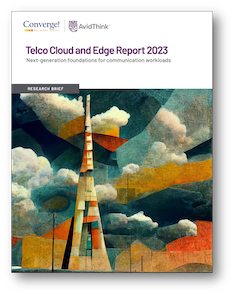
Complimentary Report Download
2023 Telco Cloud
No personal info needed to download
What the 2023 Telco Cloud and Edge report finds
Across these interviews the telco cloud is moving from theory into execution, but on contested ground. Telcos must virtualize their networks and push compute to the edge while hyperscalers pursue the same enterprise workloads, forcing a mix of competition, partnership, and hard choices about security, automation, and infrastructure.
Execution has finally arrived
Microsoft's Shawn Hakl points to AT&T as the flagship customer for Azure for Operator Distributed Services, already supporting tens of millions of users, marking telco cloud's shift from planning into carrier-grade execution.
Hyperscalers hold the edge, telcos hold sovereignty
Dell'Oro's Mauricio Sanchez and MEF's Sunil Khandekar note hyperscalers already capture enterprise workloads with superior infrastructure, but telcos retain advantages in data sovereignty, especially when partnered with the hyperscalers.
Complexity is the core challenge
Virtualized telco clouds raise complexity, per Sunil Khandekar. Spirent's Marc Cohn cites diverse hardware from public regional clouds to on-premises uCPE, with APIs, standards, and performance assurance still evolving.
Security is solvable, not optional
Nokia's Rodrigo Brito warns technology shifts open new attack vectors, while Rakuten Symphony's John Carse argues finance and defense have already built best practices for securing cloud platforms that telcos can adopt.
Automation and ecosystems enable services
Orange's Franck Morales calls automation key to services across a global provider ecosystem, and Neustar's John Carr sees software-defined networks driving an API-centric model that demands a robust ecosystem.
Distributed infrastructure underpins it all
VMware's Ram Venketaramani pushes distributed multi-cloud architecture, Equinix's Zachary Smith favors bare metal for high-intensity telco workloads, and Lightriver's Travis Ewert says optical transport ensures compute stays close to users.
Highlights from industry thought leaders













Video interviews
The Starting Point for Telco Cloud
- Dell'Oro's Mauricio Sanchez says distributed edge applications open new opportunities for telcos.
- Telcos must find a foothold as hyperscalers already capture enterprise workloads.
Abstract
Bare Metal for Telco Clouds
- Equinix's Zachary Smith says telcos need to be in many places with the most demanding requirements.
- High-intensity, multi-tenant workloads driven by billions of packets point to bare metal as an enabling solution.
Abstract
Telco cloud complexity is a big factor
- MEF's Sunil Khandekar notes telcos have domain expertise procuring network functions and building managed services.
- Moving to virtualized telco clouds raises complexity, creating both challenges and opportunities for the ecosystem.
Abstract
Hyperscalers will retain strategic advantages
- Sunil Khandekar says hyperscalers have the expertise and infrastructure to migrate enterprise workloads to their clouds.
- Telcos hold data sovereignty advantages, especially when partnered with the hyperscalers.
Abstract
Prospects for Telco Cloud and Edge
- Kaloom's Hitendra Sonny Soni discusses telco cloud and edge trends including top players, sustainability, and the killer app.
- Topics span 5G workloads, metaverse, AR/VR, OCP, and P4 programmability.
Abstract
Managing Private 5G, Telco Cloud and Edge Compute
- Kyndryl's Paul Savill says management challenges of telco cloud, private 5G, and edge compute depend on deployment complexity.
- Geographic footprint is a key factor shaping the difficulty of managing these deployments.
Abstract
Optical Transport underpins Telco Cloud
- Lightriver's Travis Ewert says tomorrow's applications share a need for compute and storage close to the user.
- Optical transport will be key to ensuring optimal performance for private 5G, IoT, AR/VR, and metaverse.
Abstract
Hyperscalers and the Carrier-Grade Telco Cloud
- Microsoft's Shawn Hakl says AT&T is the flagship customer for Azure for Operator Distributed Services.
- The platform already supports tens of millions of users as telco cloud enters actual execution.
Abstract
Securing Telco Cloud Infrastructure
- Nokia's Rodrigo Brito calls securing telco cloud infrastructure and 5G networks a top priority.
- Major technology shifts prompt hackers to look for new attack vectors, requiring strategic planning.
Abstract
Building a Global Telco Cloud
- Orange Business Services' Franck Morales describes a global telco cloud with hubs in 45 cities, expanding to hundreds.
- Capabilities include Mobile Edge Computing nodes and hosting cloud-based solutions from multiple vendors.
Abstract
Automation is the path to cloud-native network solutions
- Orange Business Services' Franck Morales says automation is key to enabling services across a global provider ecosystem.
- This automation is developing within MEF and across the wider industry.
Abstract
We Know How to Secure Telco Clouds
- Rakuten Symphony CISO John Carse argues telco cloud security is a solvable problem.
- Critical industries like finance and defense have already created best practices for securing cloud platforms.
Abstract
Telco Cloud Possibilities
- Spirent's Marc Cohn describes telco cloud evolving to hybrid public hyperscaler and in-house offerings.
- Telcos face challenges managing diverse hardware platforms, with APIs, standards, and performance assurance still evolving.
Abstract
Comparing Telco Cloud with Public Cloud
- Spirent's Dave Larson says Tier One carriers build cloud environments suited to their specific needs.
- The telco cloud NFV model presumes a DPDK, OVS, and Linux-based virtualization environment.
Abstract
Telco Cloud needs an Ecosystem
- Neustar's John Carr says telco cloud needs a robust ecosystem.
- Software-defined networks drive the industry toward an API-centric model.
Abstract
Telco Cloud, Edge and O-RAN Infrastructure
- Vapor IO CEO Cole Crawford says the company is ready to build shared-infrastructure neutral host with Open RAN.
- Handoffs between telco networks, private wireless, and hyperscale clouds must be considered from a latency perspective.
Abstract
Multi-Cloud Flexibility for Telco Cloud and Edge
- VMware's Ram Venketaramani says 5G drives telco cloud toward a distributed, multi-cloud architecture.
- Infrastructure must leverage public cloud capabilities to capture new business opportunities.
Abstract
By downloading this report, you agree to our Terms of Use and Privacy Policy.
Continue exploring
More executive showcases across next-gen infrastructure.
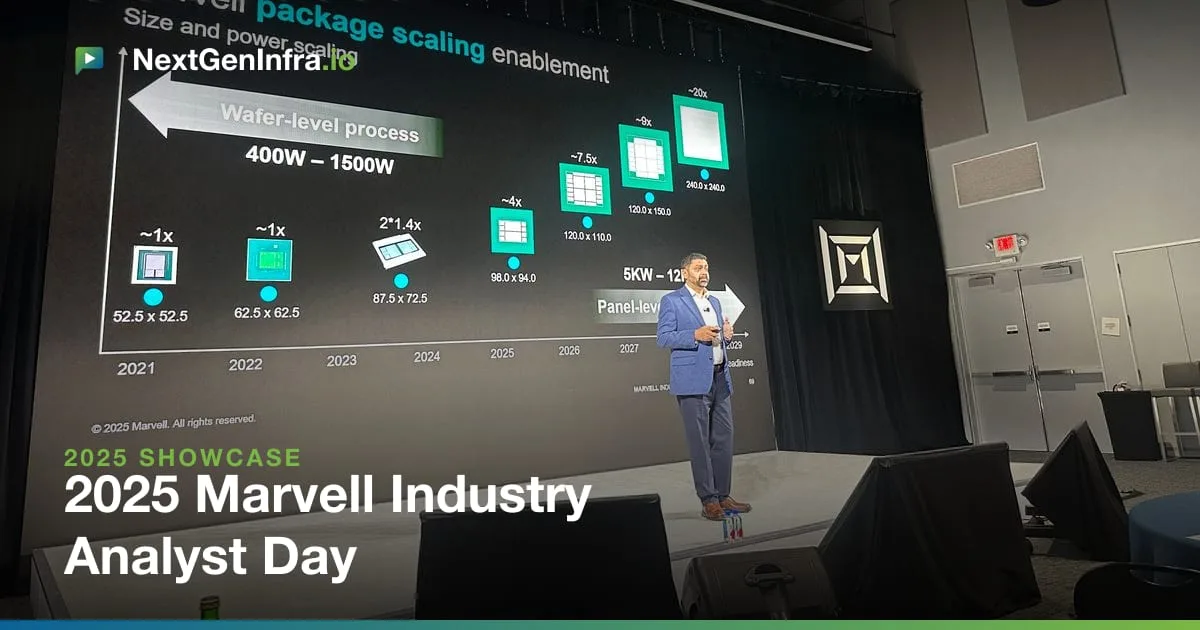
2025 Marvell Industry Analyst Day
Marvell executives share their vision for accelerated infrastructure and how Marvell's technology portfolio speeds up AI and cloud workloads
2025 OCP Global Summit
Exclusive videos from thought leaders covering data center networking (scale-up, scale-out, scale-across), photonics, liquid cooling, SONiC
2025 AI in Networking
Thought leaders discuss using predictive, generative, and agentic AI to manage, automate, scale, and optimize network infrastructure