

2026 Enterprise Connectivity
Thanks to the many sponsors who made the free download of this report possible!
NaaS, AIOps, and Zero Trust
Unified SASE for Hybrid Workforce
Meter's Unified Network Stack:
Marketing vs Reality Check for Leaders
Enterprise Networking, AI Ops & Zero Trust
Unified SASE for Hybrid Workforce
Enterprise Connectivity Report Overview
Enterprise Networks Shift from Hardware to Software Revenues
Zero Trust, AI & Mobile Connectivity
Self-Driving Networks: Unified Security & Zero Downtime
Upgrading From Legacy MPLS to SASE & Zero Trust
Meter's Unified Network Stack
Industry Collaboration for Enterprise Connectivity
The SASE Shift Explained
Disrupting Enterprise Networking
Delivering NaaS with a Zero Trust Fabric
Network & Security-Led SASE
Open Systems and Full Stack Solutions
Courtesy of our sponsors!
Complimentary Report Download
2026 Next-Gen Enterprise Connectivity
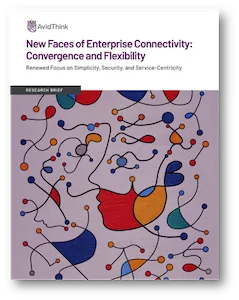
No personal info needed to download
By downloading this report, you agree to our Terms of Use and Privacy Policy.
What the 2026 report finds
Across these interviews, enterprise connectivity is converging with security into unified, cloud-delivered platforms, with SASE, zero trust, and AIOps as the throughline. The recurring tension: vendors promise autonomous, single-stack simplicity, but legacy MPLS estates, multi-vendor sprawl, AI traffic, and trust gaps keep full automation out of reach.
Networking and security are collapsing into one stack
Nearly every vendor frames the shift as converging network, security, and application monitoring into unified platforms. Meter and Nile push vertically integrated single stacks, while Aryaka's OnePass and Netskope's consolidated SASE argue against bolting on more tools.
Zero trust is a posture, not a product
ACG's Ray Mota argues zero trust demands telemetry enforcement, micro-segmentation, and continuous AI-driven monitoring rather than a standalone SKU. Nile builds a zero trust fabric into the network foundation, and Kyndryl positions it as the endpoint of MPLS-to-SASE modernization.
AIOps is now table stakes, but full autonomy remains elusive
Dell'Oro's Siân Morgan notes AIOps has moved from cutting-edge to standard vendor offering, yet full network autonomy is blocked by technical and trust challenges. HPE, Nile, and Meter lean on cloud backends and AI engines to automate operations short of true self-driving networks.
Value is migrating from hardware to recurring software and services
Dell'Oro flags a shift from hardware to recurring software licenses; Shasta Cloud uses open, multi-vendor systems to move value from commoditized equipment to services. NaaS and unified-pricing models from Meter and Nile reinforce the consumption shift.
AI traffic and hybrid work are the primary demand drivers
GenAI applications introduce large data volumes and new breach risks (Netskope), strain connectivity and observability (Aryaka), and reshape enterprise apps. Hybrid workforces accessing SaaS, data center, and cloud from many locations expose the security and experience gaps these platforms aim to close.
Highlights from industry thought leaders













Director’s Cut
Extended, in-depth versions of select interviews.
NaaS, AIOps, and Zero Trust
- Arista targets traditional network silos with unified multi-domain management
- Cloud networking principles are being applied to enterprise infrastructure to enforce consistent security policies across domains
- The strategy aims to make advanced automation accessible to broader, less specialized user bases
Abstract
Unified SASE for Hybrid Workforce
- Aryaka's OnePass architecture unifies disparate branch security and remote access under consistent policies and shared visibility
- Its SASE as a Service 2.0 platform is positioned to handle AI traffic with reliable connectivity and better observability
- The platform bundles comprehensive access control and data leakage prevention for hybrid workforces
Abstract
Meter's Unified Network Stack:
- Meter runs a vertically integrated stack spanning firewalls, switches, access points, PDUs, and cellular equipment
- A cloud backend automates network operations via real-time data processing
- The integrated approach is designed to drive intelligent, automated operational decisions
Abstract
Video interviews
Marketing vs Reality Check for Leaders
- A real gap persists between marketing claims and actual capabilities in zero-touch AI and network automation
- Zero trust should be treated as a comprehensive security posture, not a standalone product
- Effective zero trust requires telemetry enforcement, micro-segmentation, and continuous AI-driven monitoring
Abstract
Enterprise Networking, AI Ops & Zero Trust
- Arista frames modern enterprise connectivity around three pillars: infrastructure, operational models, and security
- The approach integrates network infrastructure, operations, and security technologies into a single comprehensive solution
Abstract
Unified SASE for Hybrid Workforce
- Hybrid workforces access SaaS, data center, and cloud apps from many locations, straining consistent experience and security
- Disparate point solutions create inconsistent user experiences and security gaps
- Aryaka argues for a unified approach to close those gaps
Abstract
Enterprise Connectivity Report Overview
- The report centers on the challenges enterprises face converging networking and security
- It maps enterprise convergence journeys as a core insight
- It offers near-term recommendations for both vendors and enterprises
Abstract
Enterprise Networks Shift from Hardware to Software Revenues
- AIOps features in enterprise networking have shifted from cutting-edge to standard vendor offerings
- Full network autonomy remains elusive due to technical and trust challenges
- Value is moving from hardware to recurring software licenses
Abstract
Zero Trust, AI & Mobile Connectivity
- Ericsson differentiates on wireless WAN for mobile connectivity in vehicles, IoT, and mission-critical deployments
- Its focus is use cases where connectivity loss directly affects public safety
Abstract
Self-Driving Networks: Unified Security & Zero Downtime
- HPE sees networking, security, and application monitoring converging into unified solutions
- Continuous uptime is achieved through orchestrated upgrades and cloud-based seamless experiences
Abstract
Upgrading From Legacy MPLS to SASE & Zero Trust
- Enterprises are modernizing decade-old legacy MPLS networks to SD-WAN, SASE, and zero trust
- Key obstacles include complexity, business process integration, and poor network inventory records
Abstract
Meter's Unified Network Stack
- Convergence is accelerating as customers seek to escape complex multi-vendor deployments and pricing models
- Meter offers a single integrated stack for network, security, performance, and management
- Unified pricing is positioned to deliver best-of-breed performance without multi-vendor complexity
Abstract
Industry Collaboration for Enterprise Connectivity
- Mplify's Enterprise Leadership Program brings enterprise leaders together with service providers and vendors early in development
- The collaboration has driven industry-first innovations like automated circuit impairment communications and cyber security alerts
Abstract
The SASE Shift Explained
- GenAI applications introduce significant data volumes and new breach risks for IT and security teams
- Netskope advocates a consolidated SASE framework over adding more point tools
- The goal is to preserve performance, reliability, and visibility amid anywhere access
Abstract
Disrupting Enterprise Networking
- Nile's seven-year effort centers on ruthless automation via AI engines, data analytics, and a zero trust fabric
- The company reports 500 deployments to date
Abstract
Delivering NaaS with a Zero Trust Fabric
- Nile applies data center and cloud principles to campus and branch networking gaps
- Security is built into the network foundation via a zero trust fabric
- It is delivered as an AI-powered secure network-as-a-service model
Abstract
Network & Security-Led SASE
- Enterprises pursue SASE via either network-led or security-led transformation paths
- Network-led approaches build on SD-WAN evolution and branch augmentation
- Security-led approaches span SWG, SaaS app security, AI access security, DLP, and CASB
Abstract
Open Systems and Full Stack Solutions
- Shasta Cloud targets equipment commoditization, vendor consolidation, complexity, security threats, and IT skills shortages
- It uses open networking systems to build multi-vendor interoperable ecosystems
- The model shifts value from hardware to services
Abstract
By downloading this report, you agree to our Terms of Use and Privacy Policy.
Continue exploring
More executive showcases across next-gen infrastructure.

2026 Upperside World Congress
Leading executives at Upperside World Congress in Paris discuss AI, ML, IP, SRv6, Quantum networking, DCI, PQC, SASE, and SD-WAN

2026 OCP Global Summit
Exclusive videos from OCP Global Summit 2026 (Oct 12-15, San Jose). Topics: co-packaged optics, 800V racks, AI inference disaggregation, edge DPUs, AI computing continuum
2026 Technology Exploration Forum
Highlights from Ethernet Alliance's 2026 TEF. Topics: 224/448 Gbps/lane, 1.6/3.2 Tbps, AI fabric, InfiniBand, UCIe, CXL, PCIe Gen 6/7