
2026 Data Center Networking - Spring Edition
Welcome to the NextGenInfra Data Center Networking for AI and Cloud Showcase!
As the world invests multiple hundreds of billions to trillions of dollars in data center build out for AI, what's the role of networking? Will the shift in focus from pre-training to post-training to test-time/inference-time scaling change the data center computing and networking requirements? What's the latest in scale-up, scale-out, and scale-across networking.
To help our readers sort through the rapid changes in the space, we've captured insights from the leading thinkers in the data center networking ecosystem here in our showcase. The content in the videos and our report highlight the state-of-the-art across the three domains of networking. Check it out!
Thanks to our sponsors for making the report possible!
Rethinking Data Center Network Architecture
Rethinking Data Center Network Architecture
The Optics Scaling Challenge at 1.6T
AI Data Centers Need Purpose-Built Networks
Rethinking AI Networks from First Principles
Unified Network Fabric for Distributed AI Workloads Across Data Centers
How Distributed AI Workloads Are Reshaping Network Architecture
Optical Interconnects for AI
Ethernet for AI Networking at Scale: Building 100K+ XPU Clusters
AI Networking at Scale: GPU Cluster Interconnect Solutions for Data Centers
Solving GPU Cluster Inefficiency: From 30% to Peak AI Performance
MicroLEDs for AI Data Center Connectivity at Scale
Ethernet Fabrics for AI Data Centers
Solving Power & Speed Challenges at 150-300kW Per Rack
Industry's First 224G Interoperability Testing
Lightmatter's Optical Interconnects for AI Scale-Up
Big Outlook for XPU-Attach
Linear Pluggable Optics for Data Center Efficiency
Integration is the Real Race in AI Data Center Networking
NVIDIA's AI Factory Networking Stack
AI-Driven Multi-Die Design
UALink 2.0: Open GPU Interconnect for AI Clusters
UCIe Chiplet Connectivity for Performance & Efficiency
AI Data Centers Need Purpose-Built Networks
Optical Compute Interconnect Standardization
Courtesy of our sponsors!
Complimentary Report Download
2026 Data Center Networking - Spring Edition
No personal info needed to download
By downloading this report, you agree to our Terms of Use and Privacy Policy.
What the 2026 report finds
Across two dozen conversations with the vendors, standards bodies, and operators building AI data centers, five themes define networking in 2026 — the year the industry stopped bolting networks onto AI clusters and started designing them as first-class infrastructure.
Networking is ~10% of the cost but ~80% of the pain
Interconnect is a small slice of AI infrastructure spend yet the dominant source of deployment risk and idle GPUs. Getting the fabric right — not adding more compute — is what unlocks utilization, which is why so much 2026 innovation is concentrated here.
Ethernet becomes the default AI fabric
Scheduled and enhanced Ethernet — Ultra Ethernet, Broadcom's Tomahawk/Jericho, DriveNets' scheduled fabric — is displacing proprietary interconnect for scale-out, now reaching 100K+ XPU clusters. The open ecosystem is winning on cost and choice even where it trails on raw latency.
Three planes: scale-up, scale-out, scale-across
AI factories are now designed as distinct network layers, each with its own bandwidth and latency profile. Scale-up interconnect is standardizing fast — UALink 2.0, NVLink Fusion, ESUN, OCI and UCIe — and vendors increasingly differentiate on unifying all three planes into one fabric.
The rack goes optical — and power is the ceiling
As per-GPU bandwidth doubles each generation, copper runs out of reach inside the rack. Co-packaged and linear-pluggable optics, optical engines, and microLED links move light into and between packages — but a 1.6T module's power draw means energy, not bandwidth, is the binding constraint.
Efficiency and thermals decide what's usable
Training clusters routinely run at 30–50% efficiency; fine-grain telemetry, nanosecond clock synchronization, and 150–300 kW racks with liquid cooling and flex-grid power determine whether the silicon can actually be put to work. The network is now an observability and power problem as much as a bandwidth one.
Highlights from industry thought leaders




















Director’s Cut
Extended, in-depth versions of select interviews.
Rethinking Data Center Network Architecture
- Ethernet is advancing from 800G to 3.2T with co-packaged optics and scheduling layers that remove lossiness for AI fabrics
- GPU clusters are scaling from 8,000 toward one million units
- DriveNets' scheduled fabric claims better time-to-first-token and lower cost-per-million-tokens than proprietary alternatives
Abstract
Rethinking Data Center Network Architecture
- Scale-out is bandwidth-driven (800G to 1.6T+); scale-up fabrics unify xPU pods needing memory sharing and ultra-low latency
- Marvell roadmap: 100T and 200T scale-out fabrics plus 115T and 57T scale-up fabric devices
- Scale-up support spans NVLink Fusion, UALink, and ESUN
Abstract
The Optics Scaling Challenge at 1.6T
- GPU interconnect speeds double each generation, forcing copper-to-optical transitions inside the rack
- Power and component supply are the binding constraints on AI data center optics
- Nokia positions its indium phosphide (InP) technology as an open component supply for hyperscalers
Abstract
AI Data Centers Need Purpose-Built Networks
- AI workloads need deterministic, AI-specific networking rather than adapted general-purpose gear
- Upscale AI co-designs ASIC, systems, and software while maintaining openness
Abstract
Video interviews
Rethinking AI Networks from First Principles
- Aria's Deep Networking approach optimizes AI cluster performance through fine-grain telemetry
- Microsecond-resolution telemetry is embedded directly in ASICs, paired with agentic AI and built-in domain expertise
Abstract
Unified Network Fabric for Distributed AI Workloads Across Data Centers
- One unified fabric connects GPU resources across scale-up, scale-out, and scale-across layers
- Hardware-abstracted network OS runs across multiple silicon platforms
Abstract
How Distributed AI Workloads Are Reshaping Network Architecture
- Ethernet is now a first-class citizen in AI networks, for both training and inference on heterogeneous hardware
- One unified fabric targets telcos, colos, hyperscalers, enterprises, and neoclouds
- Fabric is scalable, secured, fully programmatic, and orchestrated on demand across data centers
Abstract
Optical Interconnects for AI
- Optical engines fabricated on TSMC's platform; multi-chip packages integrate eight engines to replace copper
- Chip-to-system approach scales both GPU and switch connectivity
- Partner ecosystem (FOCI, Browave, Wiwynn, Alchip, GUC) targets 2028 deployment
Abstract
Ethernet for AI Networking at Scale: Building 100K+ XPU Clusters
- Ethernet has become the industry standard for AI networking, enabling clusters of 100,000+ XPUs
- Scale-up, scale-out, and scale-across are all addressed with Ethernet architectures
- Portfolio spans Tomahawk Ultra, Tomahawk 6, Thor Ultra, and Jericho 4
Abstract
AI Networking at Scale: GPU Cluster Interconnect Solutions for Data Centers
- Nitro linear retimer driver extends active copper cables for GPU cluster interconnect
- Vesta 200 6.4T CPX optical engine targets cluster-scale optics
Abstract
Solving GPU Cluster Inefficiency: From 30% to Peak AI Performance
- GPU training clusters typically run at only 30-50% efficiency
- Root causes are inter-GPU communication, availability issues, and straggler tail latency
- Nanosecond-precision clock synchronization mitigates these on InfiniBand or RoCE networks
Abstract
MicroLEDs for AI Data Center Connectivity at Scale
- MicroLED links use dense arrays of modest-speed LEDs rather than fast lasers
- Spare-channel failover delivers reliability and resilience
- Power consumption is in the low single-digit picojoules per bit
Abstract
Ethernet Fabrics for AI Data Centers
- Networking is ~10% of AI infrastructure cost but causes ~80% of deployment challenges
- Scheduled Ethernet fabrics can exceed InfiniBand performance
Abstract
Solving Power & Speed Challenges at 150-300kW Per Rack
- 9-12 month technology cycles outpace 18-24 month infrastructure builds — ECL compresses both
- Rack power densities are reaching 150-300kW
- A 'flex grid' approach combines multiple energy sources per site
Abstract
Industry's First 224G Interoperability Testing
- Second 224G Plugfest: 20+ companies testing real product interoperability at Keysight
- Nine compliance stations feed results back into IEEE specification development
Abstract
Lightmatter's Optical Interconnects for AI Scale-Up
- Passage EVK50 delivers DWDM with 16 wavelengths per fiber at 400Gbps Tx + 400Gbps Rx
- Architecture aligns with the new OCI MSA (8-wavelength, 4+4 band interleave)
- Targets energy-efficient, compact optical scale-up interconnects
Abstract
Big Outlook for XPU-Attach
- Marvell customizes every component in the XPU tray beyond the XPU itself
- CXL-enabled memory adds expansion and near-memory compute
- Security devices and high-performance NICs build on Marvell SerDes and IP platforms
Abstract
Linear Pluggable Optics for Data Center Efficiency
- 1.6T optical modules consume nearly double the power of 800G — up to +1kW on a 64-port switch
- Linear Pluggable Optics (LPO) cuts power by leaning on the switch ASIC's DSPs
Abstract
Integration is the Real Race in AI Data Center Networking
- Hyperscaler AI demand is reshaping the data center networking market
- Integration — not any single component — is the real competitive race
- Nokia's portfolio spans switching silicon, DSPs, and Infinera-derived optics
Abstract
NVIDIA's AI Factory Networking Stack
- AI factories require four distinct network layers, each purpose-designed
- Scale-up on NVLink; scale-out on InfiniBand or Spectrum-X Ethernet
- Scale-across on Spectrum-XGS; storage on the BlueField-4 STX architecture
Abstract
AI-Driven Multi-Die Design
- Multi-die design adoption is accelerating for AI silicon
- Advanced packaging enables larger formats and denser interconnect
- Power delivery, thermal, and multiphysics challenges now exceed manual design methods
Abstract
UALink 2.0: Open GPU Interconnect for AI Clusters
- UALink 2.0 released: protocol-physical separation, in-network compute, enhanced manageability
- Includes the consortium's first UCIe-based chiplet specification
- 115-member consortium expects customer solutions on 2.0 in 2027
Abstract
UCIe Chiplet Connectivity for Performance & Efficiency
- UCIe connects chiplets in-package and package-to-package, including over co-packaged optics
- Bandwidth density is 1-4 orders of magnitude better than PCIe or Ethernet
- Enables composable systems with dynamic resource allocation
Abstract
AI Data Centers Need Purpose-Built Networks
- AI workloads demand completely lossless, synchronized networks
- Purpose-built silicon, systems, and software for scale-up and scale-out — not adapted general-purpose infrastructure
Abstract
Optical Compute Interconnect Standardization
- OCI standardization is a milestone for scale-up interconnects and co-packaged optics
- Multi-color laser technology enables GPU-to-memory optical links
- Xscape recently announced its own laser module
Abstract
By downloading this report, you agree to our Terms of Use and Privacy Policy.
Continue exploring
More executive showcases across next-gen infrastructure.
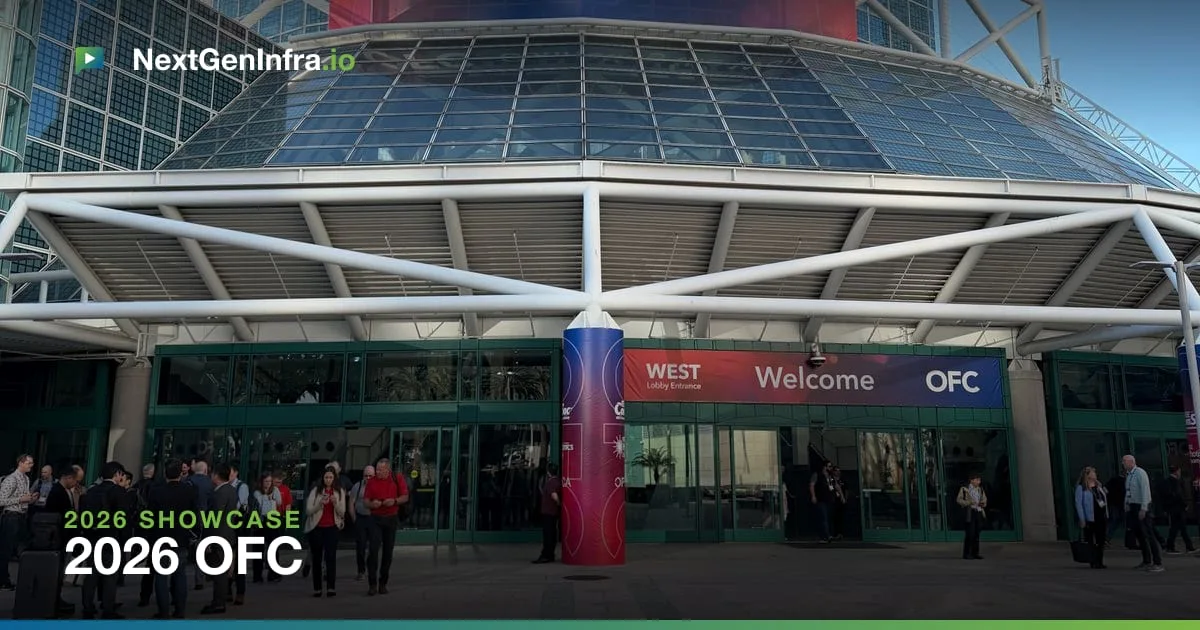
2026 OFC
Leading executives at OFC 2026 in Los Angeles covering optical and fiber for AI data centers
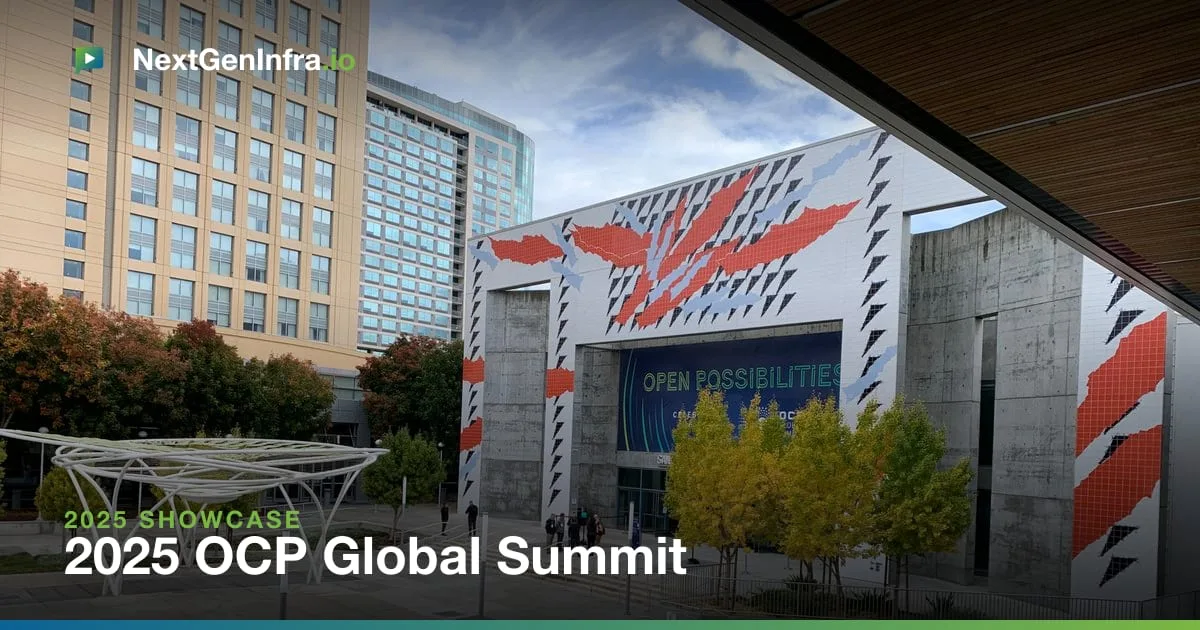
2025 OCP Global Summit
Exclusive videos from thought leaders covering data center networking (scale-up, scale-out, scale-across), photonics, liquid cooling, SONiC

2025 MPLS World Congress
Leading executives at MPLS World Congress 2025 in Paris discuss latest in IP networking, AI networking, IPv6, SRv6, converged optics