

Data Center Networking for AI and Cloud
Welcome to the NextGenInfra Data Center Networking for AI and Cloud Showcase!
As the world invests multiple hundreds of billions to trillions of dollars in data center build out for AI, what's the role of networking? How should networking serve both AI and Cloud workloads? Will the shift from pre-training to post-training to test-time/inference-time scaling change the data center computing and networking requirements? So many questions, but do we know the answers?
To help our readers, we've captured insights from the leading thinkers in the data center networking ecosystem here in our showcase. The content in the videos and our report highlight the state-of-the-art in networking scale-up, scale-out, and scale-outside. What's scale-outside? Download the report to find out!
Thanks to our sponsors for making the report possible!
Use Cases for Chiplets in AI Clusters
AI Infrastructure Evolution
Four Connectivity Fabric Innovations for AI Clusters
Breaking the AI Data Bottleneck
Scheduled Ethernet Fabric for Data Center Infrastructure
Ethernet Matches InfiniBand for AI Clusters
Speeding Forward with PCIe Gen 6 and 7
Active Electrical Cables for AI Server Architecture
Testing 1.6T Cables at 200GB/Lane
AI Data Centers and the Hyperscale Model
Network Architecture for Scaling AI
Networking Massive GPU Clusters
Courtesy of our sponsors!
Complimentary Report Download
2025 Data Center Networking
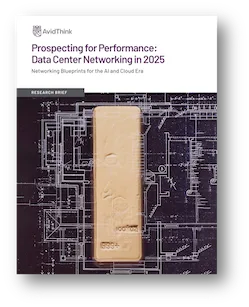
No personal info needed to download
By downloading this report, you agree to our Terms of Use and Privacy Policy.
What the 2025 report finds
Across a dozen interviews, the 2025 report captures an AI-driven networking market splitting into two problems, scale-up inside the rack and scale-out across the cluster, with Ethernet mounting a credible challenge to InfiniBand and a wave of new interconnect standards and physical-layer parts racing to keep GPUs fed.
Ethernet closes the gap on InfiniBand
Juniper's AI-lab and hyperscaler benchmarks show Ethernet matching InfiniBand performance in AI clusters, and buyers increasingly pick it for ecosystem breadth and cost. Even NVIDIA leans in with Spectrum-X, positioned to support 100K+ GPU clusters.
Scale-up gets its own open standard
UALink emerges as an open scale-up fabric targeting up to 1,024 connected GPUs at 200-800 Gbps, backed by 75+ consortium members. Astera Labs stakes out an early leadership position in UALink development.
The physical layer is the bottleneck
Feeding GPUs is now a copper-and-silicon problem: Marvell pushes PCIe Gen 7 to 128G on TSMC 3nm and ships 1.6T active electrical cables, while Multilane tests at 200 GB per lane. Chiplets and die-to-die links (Alphawave, Baya) attack data movement inside the package.
AI infrastructure spreads beyond hyperscalers
Nokia argues AI buildout spans many markets with distinct power, space, and geographic constraints, not one hyperscale template. Arrcus echoes this, extending GPU-connecting Ethernet fabric out toward the edge.
Power and determinism become design centers
Liquid cooling and advanced switch designs recur as power-efficiency levers, and lossless behavior matters as much as raw speed. DriveNets' scheduled Ethernet fabric eliminates jitter and packet drop to link thousands of GPUs in a single hop on white box hardware.
Highlights from industry thought leaders











Video interviews
Use Cases for Chiplets in AI Clusters
- AI demand plus maturing die-to-die interface standards are the twin drivers accelerating chiplet adoption.
- Three chiplet use cases: compute-to-compute (high bandwidth, low latency), compute-to-IO for extended connectivity, and compute-to-optics.
- Compute-to-optical interfacing targets long-distance communication across AI clusters.
Abstract
AI Infrastructure Evolution
- AI is progressing from training toward distributed inference, and networking fabric must follow the workload.
- Arrcus offers IPsec offloading and cost-management for AI data centers atop a multi-platform fabric and OS.
- Ethernet's role is expanding to connect GPU stacks all the way out to edge computing.
Abstract
Four Connectivity Fabric Innovations for AI Clusters
- Astera Labs spans four connectivity innovations: PCIe Gen 6, the Cosmos software suite, and Leo CXL smart memory controllers.
- CXL smart memory controllers position Astera in the memory-expansion layer of AI clusters.
- The company is positioning itself as a leader in UALink development.
Abstract
Breaking the AI Data Bottleneck
- Baya's Network on Chip (NoC) technology targets on-die data movement bottlenecks in AI compute architectures.
- Its chiplet-ready foundational product has already shipped to multiple customers.
- Baya is expanding beyond its core into automotive and data center markets.
Abstract
Scheduled Ethernet Fabric for Data Center Infrastructure
- DriveNets Network Cloud AI uses scheduled Ethernet fabric to eliminate jitter and packet drop at low latency.
- The fabric connects thousands of GPUs through a single hop.
- It runs on cost-effective white box hardware rather than proprietary switches.
Abstract
Ethernet Matches InfiniBand for AI Clusters
- Juniper's AI-lab and hyperscaler benchmarks show Ethernet matching InfiniBand performance in AI clusters.
- Leading AI providers pick Ethernet for its broad ecosystem and cost advantages.
- Power efficiency is pursued through liquid cooling and advanced switch designs.
Abstract
Speeding Forward with PCIe Gen 6 and 7
- Marvell demoed PCIe Gen 6 retimers and Gen 7 technology as critical enablers for scaling up AI infrastructure.
- A PCIe Gen 7 system hit 128G transfer speeds with improved bit error rates on TSMC's 3nm process.
- The Gen 6 demo used a three-board setup showcasing retimer capabilities.
Abstract
Active Electrical Cables for AI Server Architecture
- AI servers are reshaping data center architecture via new switch placement and rack configurations.
- Marvell's 7-meter 28-gauge active electrical cables support 800G breakout connections.
- Its 1.6T product uses 32-gauge cables optimized for GPU-to-GPU connectivity.
Abstract
Testing 1.6T Cables at 200GB/Lane
- AI and cloud providers are driving demand for faster, higher-density network connectivity.
- Multilane's new bit error rate tester operates at 200 GB per lane.
- It was demonstrated with a 3-meter 1.6 terabit active electrical cable for AI-cluster interconnects.
Abstract
AI Data Centers and the Hyperscale Model
- AI infrastructure extends well beyond hyperscalers into multiple markets with distinct power and space constraints.
- Geography shapes AI data center requirements, not a single hyperscale template.
- Nokia's approach centers on partnerships, multivendor management, and comprehensive networking.
Abstract
Network Architecture for Scaling AI
- NVIDIA spans scale-up and scale-out with GB200 NVL72, InfiniBand, and the Spectrum-X Ethernet platform.
- Spectrum-X, its optimized Ethernet offering, is positioned to support 100K+ GPU clusters.
- NVIDIA embraces both InfiniBand and Ethernet rather than betting on a single fabric.
Abstract
Networking Massive GPU Clusters
- UALink is an open standard for scale-up accelerator interconnect, targeting up to 1,024 connected GPUs.
- The spec aims for 200-800 Gbps data rates with low-latency GPU-to-GPU communication.
- The consortium counts over 75 members backed by major tech companies.
Abstract
By downloading this report, you agree to our Terms of Use and Privacy Policy.
Continue exploring
More executive showcases across next-gen infrastructure.
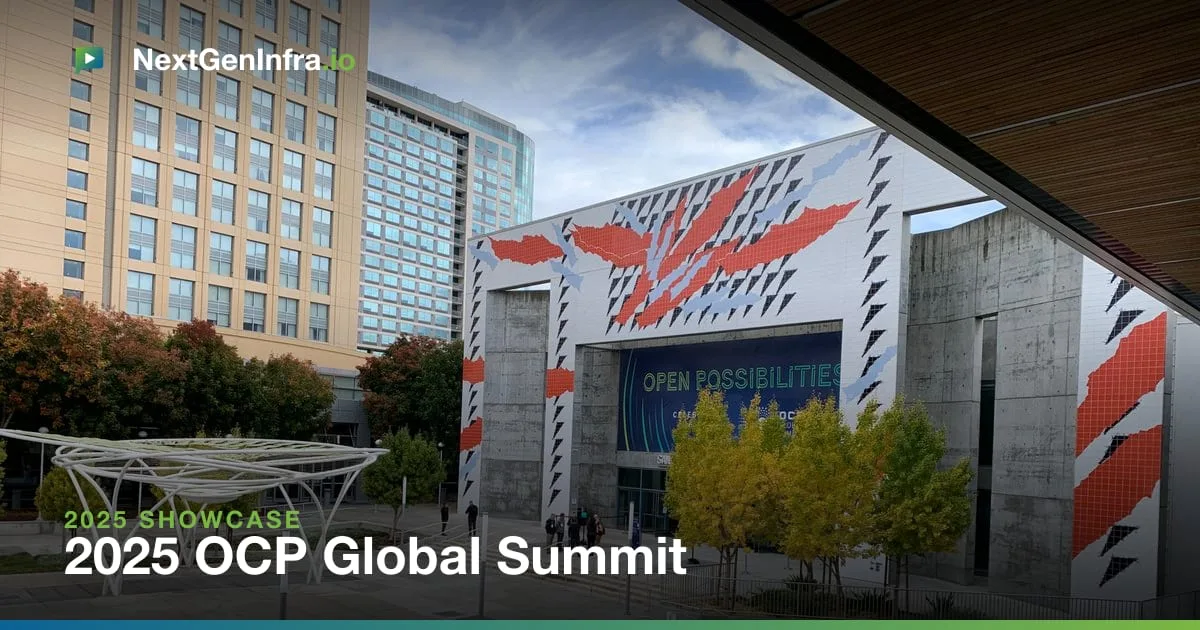
2025 OCP Global Summit
Exclusive videos from thought leaders covering data center networking (scale-up, scale-out, scale-across), photonics, liquid cooling, SONiC
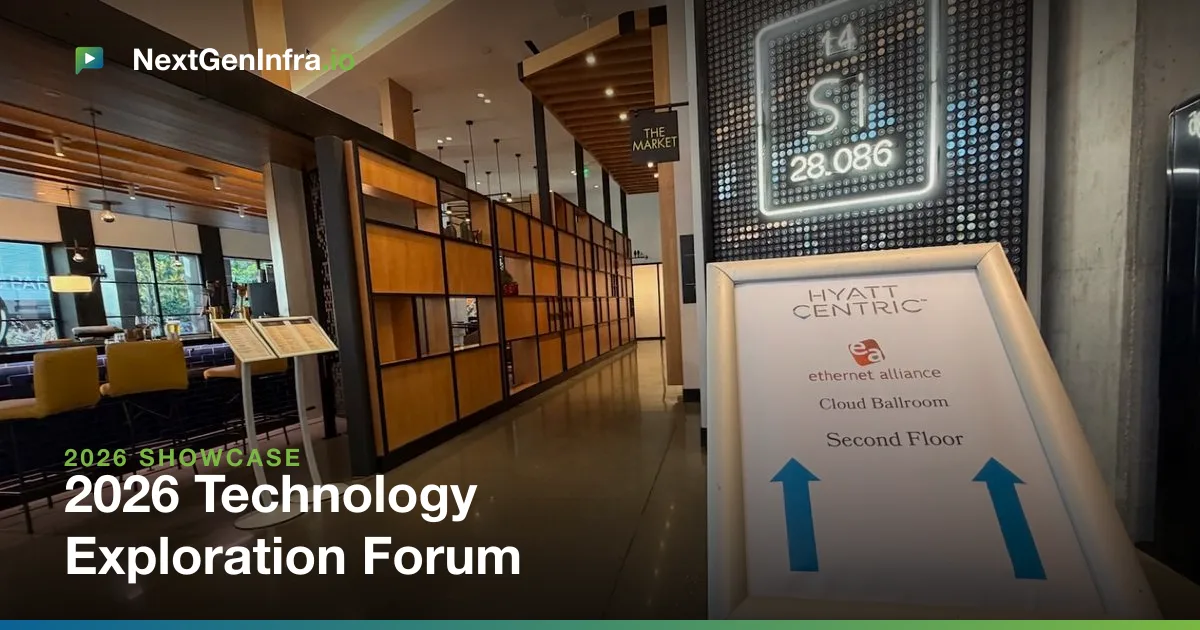
2026 Technology Exploration Forum
Highlights from Ethernet Alliance's 2026 TEF. Topics: 224/448 Gbps/lane, 1.6/3.2 Tbps, AI fabric, InfiniBand, UCIe, CXL, PCIe Gen 6/7
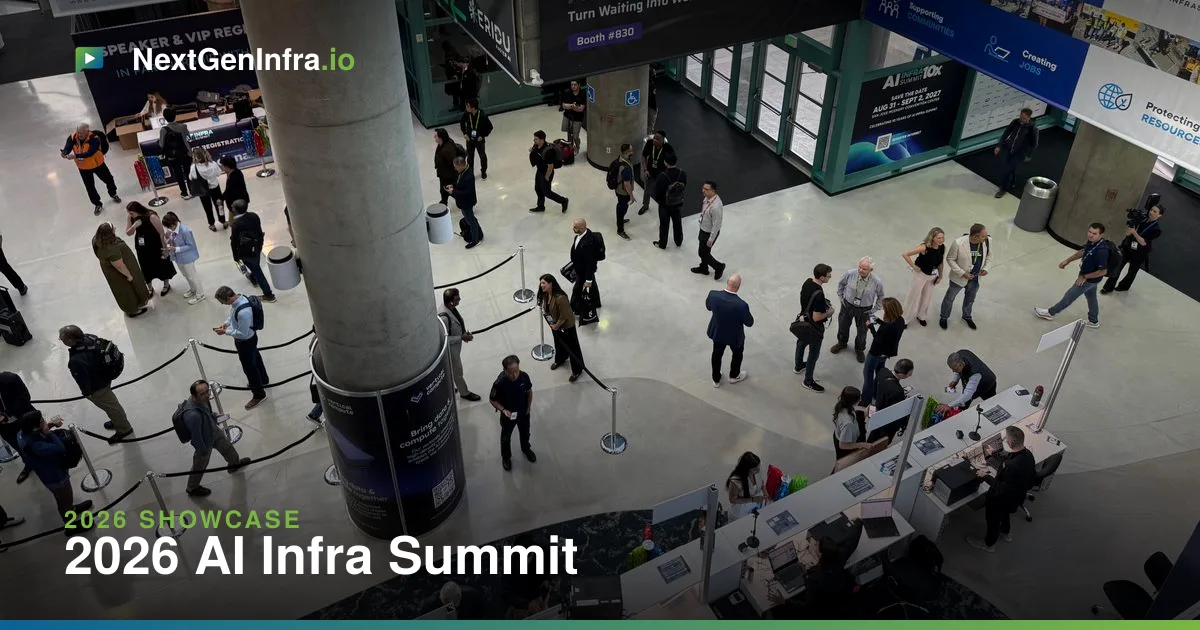
2026 AI Infra Summit
Executives at AI Infra Summit 2026 in Santa Clara discuss full-stack AI infrastructure — chips, interconnects, networking, memory, storage, power, and the data centers behind AI training and inference