

OCP Global Summit Showcase
While you're here, feel free to grab our latest research brief right from this page.
Impactful AI Connectivity
Are AI Data Centers Overlooking Security?
The Ethernet Path to Scale-Up Networks
Cracking the Data Center Thermal Challenge with Carbon Nanotubes
The Bright Outlook for Liquid Cooling
Hydrogen Power for Gigawatt Data Centers
The Future of Scaling Networks is Software
Custom Silicon for Hyperscale Data Centers
3nm Drives PCIe Gen 7
Compressed Dev Cycles for AI Interconnects
The Hidden Backbone of AI: Data Storage
AI Workload Emulation
Latest Research Brief
Download Our Latest Report
Data Center Networking in 2026 — Scaling to New Heights
More about this report →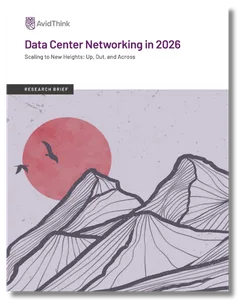
No personal info needed to download
By downloading this report, you agree to our Terms of Use and Privacy Policy.
Highlights from industry thought leaders











Video interviews
Impactful AI Connectivity
- Astera Labs' Ahmad Danesh names three data center challenges: AI workloads, real-time reasoning, and rapid deployment of new accelerators.
- Its Ethernet retimers, Smart Fabric switch, and PCIe 6 retimers pair with the Cosmos software stack to improve connectivity and observability.
Abstract
Are AI Data Centers Overlooking Security?
- Axiado CEO Gopi Sirineni argues modern AI servers need built-in, hardware-based security.
- Its platform root of trust and accelerated computing defend server control and management for AI and x86-based systems.
Abstract
The Ethernet Path to Scale-Up Networks
- Broadcom's Ram Velaga notes Ethernet dominates backend networks for GPU clusters of 10,000 to over 100,000 GPUs.
- He anticipates Ethernet winning scale-up networking within racks on both technical and economic merits.
Abstract
Cracking the Data Center Thermal Challenge with Carbon Nanotubes
- Carbice's Baratunde Cola introduces vertically aligned carbon nanotube thermal interface materials for data center and AI cooling.
- They hold consistent performance through thermal cycles, improving energy efficiency and asset longevity.
Abstract
The Bright Outlook for Liquid Cooling
- Dell'Oro's Lucas Beran examines the growing importance of data center liquid cooling.
- He covers single-phase and two-phase direct-chip cooling plus immersion cooling for high-density AI workloads.
Abstract
Hydrogen Power for Gigawatt Data Centers
- ECL co-founder Yuval Bachar describes off-grid data centers powered by hydrogen fuel cells.
- The zero-emission, water-positive microgrid addresses unreliable grid power amid rising AI-driven demand.
Abstract
The Future of Scaling Networks is Software
- IP Infusion's software helped Scott Data scale from 100 Gig to 400 Gig networks on OCP-accepted hardware.
- Kelly LeBlanc notes the equipment now operates at over 14 terabits per second.
Abstract
Custom Silicon for Hyperscale Data Centers
- Marvell's Nigel Alvares details custom silicon co-developed with hyperscalers for optimized performance, power, and cost.
- He announces Meta's FB NIC, open-sourced to OCP and built on Marvell's 5-nanometer platform.
Abstract
3nm Drives PCIe Gen 7
- Marvell's Annie Liao discusses PCIe retimers addressing the challenge of rising interconnect speeds.
- Its Gen 6 and Gen 7 solutions extend trace lengths to support upcoming PCI advancements.
Abstract
Compressed Dev Cycles for AI Interconnects
- Multilane's Hani Daou flags compressed demand cycles and interoperability risks in AI compute interconnects.
- He introduces new high-lane-count testing equipment to ensure comprehensive validation.
Abstract
The Hidden Backbone of AI: Data Storage
- Seagate's Praveen Viraraghavan stresses that all AI models, checkpoints, and datasets require long-term storage.
- Hyperscalers, OEMs, and on-premises solutions grow capacity at scale and use data lakes to feed compute clusters.
Abstract
AI Workload Emulation
- Spirent's Kevin Chang introduces AI workload emulation that validates AI fabrics without needing actual GPUs.
- The system integrates the OCP NIC 3.0 form factor to test various system elements and network technologies.
Abstract
By downloading this report, you agree to our Terms of Use and Privacy Policy.
Continue exploring
More executive showcases across next-gen infrastructure.
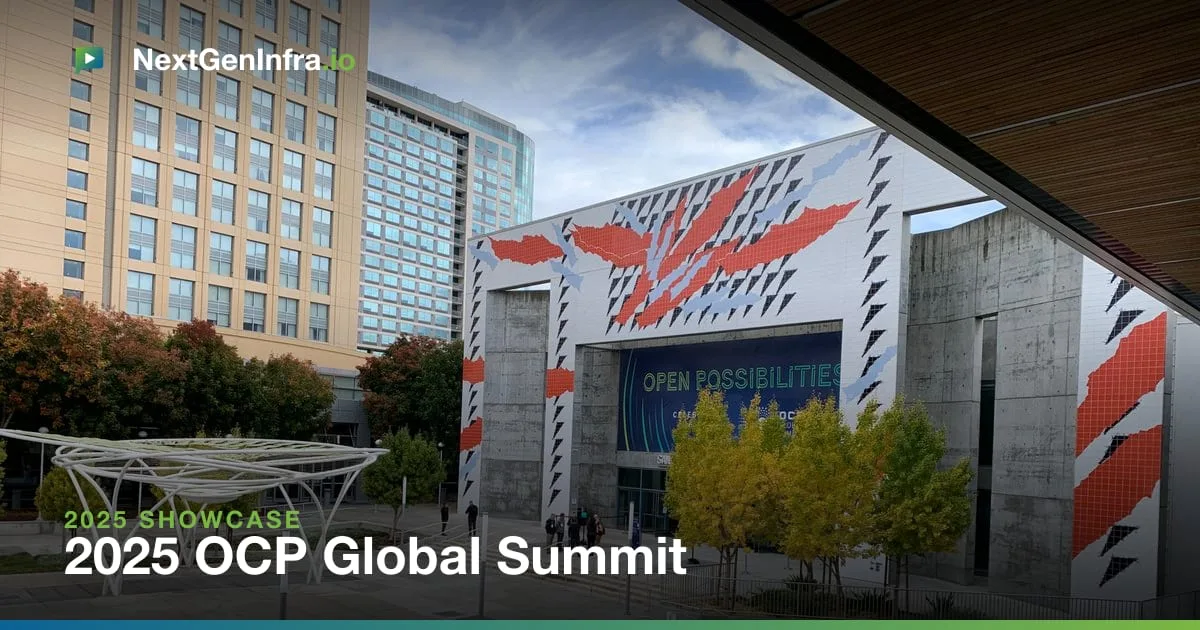
2025 OCP Global Summit
Exclusive videos from thought leaders covering data center networking (scale-up, scale-out, scale-across), photonics, liquid cooling, SONiC
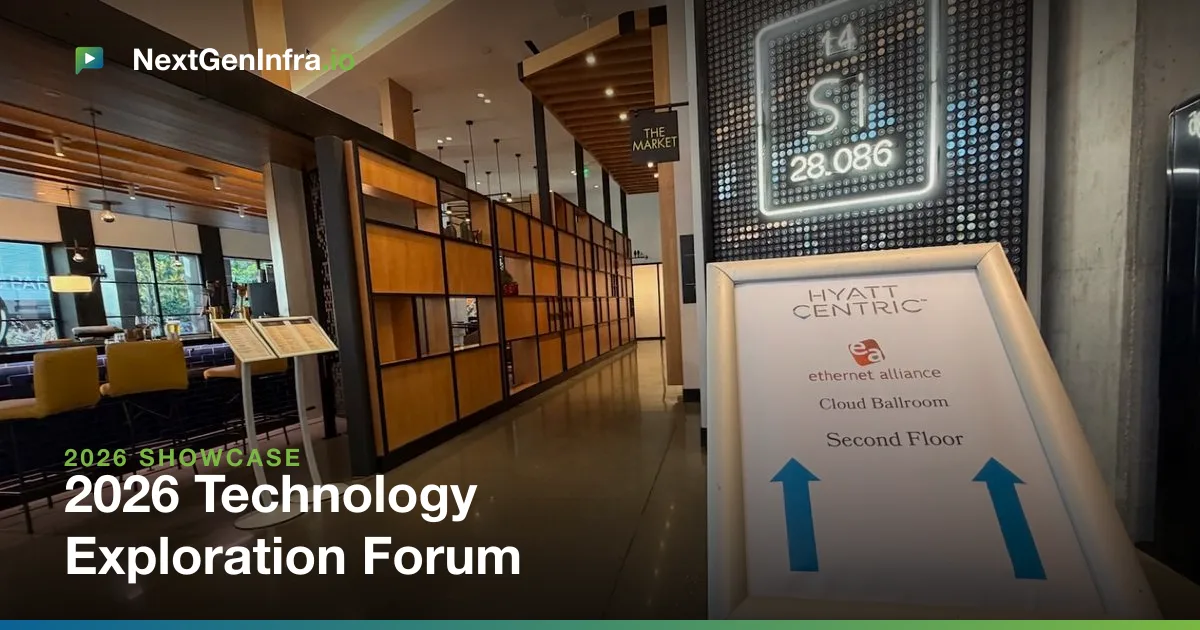
2026 Technology Exploration Forum
Highlights from Ethernet Alliance's 2026 TEF. Topics: 224/448 Gbps/lane, 1.6/3.2 Tbps, AI fabric, InfiniBand, UCIe, CXL, PCIe Gen 6/7
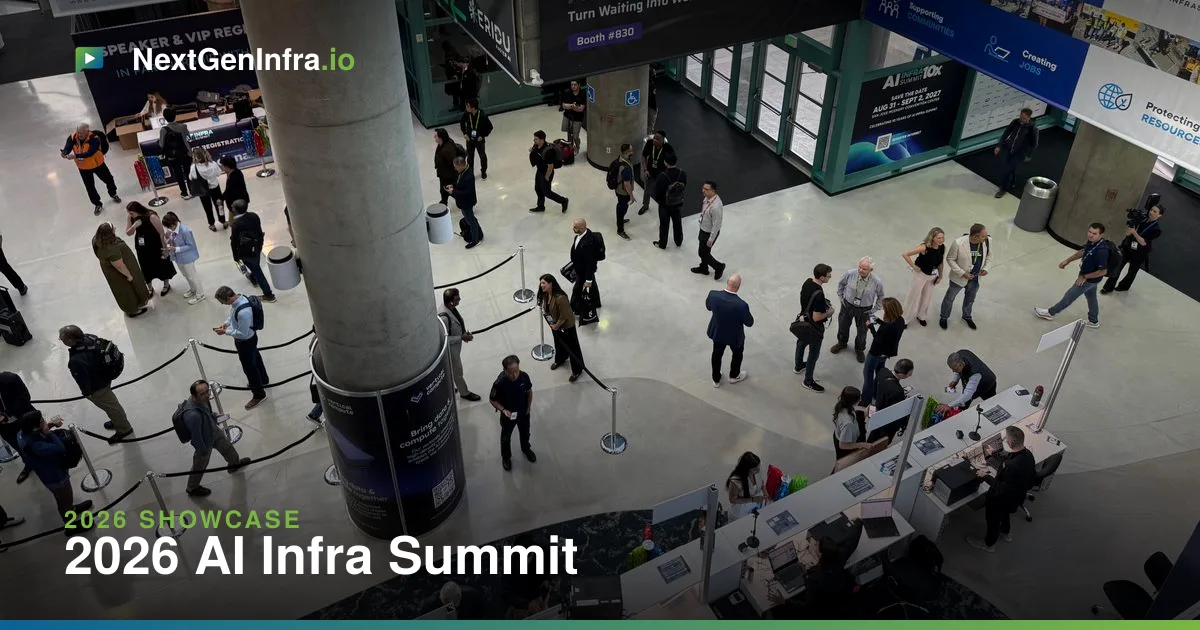
2026 AI Infra Summit
Executives at AI Infra Summit 2026 in Santa Clara discuss full-stack AI infrastructure — chips, interconnects, networking, memory, storage, power, and the data centers behind AI training and inference